
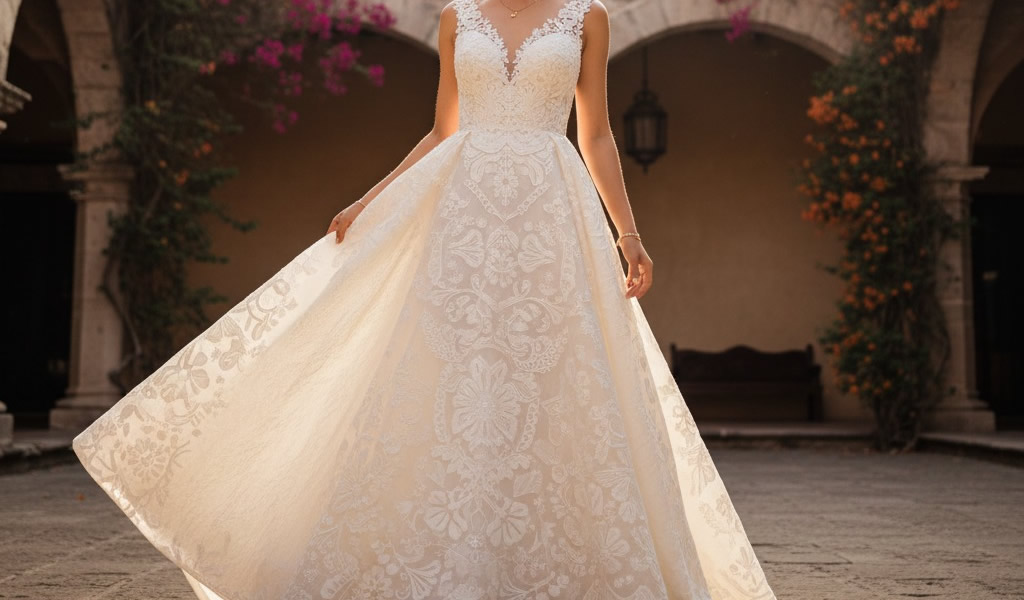
Wedding Dress Fabrics
When a bride falls in love with a wedding dress, the first thing she usually notices is the silhouette. Maybe it is the clean, elegant shape of a crepe gown, the luxurious shine of satin, the romantic texture of lace or the movement of a skirt made from layers of tulle. But underneath that silhouette is something that determines almost everything about the way the dress looks and feels: the fabric.
The fabric of a wedding dress is not simply a matter of appearance. It influences how the gown moves, how it fits the body, how comfortable it feels throughout the wedding day and even how easy—or complicated—it may be to alter. For a bride planning a wedding in Denver, fabric can also become an important consideration because the weather, venue and season can vary considerably throughout the year.
Understanding the differences between bridal fabrics can make shopping for a wedding dress much easier. It can also help you have a more productive conversation with your seamstress when it is time for wedding dress alterations.
Why Wedding Dress Fabric Matters
Two wedding dresses can have almost identical silhouettes and still look completely different because they are made from different fabrics.A structured satin gown can create a polished, formal silhouette with a pronounced presence. A lightweight chiffon gown moves softly with the bride, creating a more relaxed and romantic feeling. Lace introduces texture and visual detail, while crepe tends to create a smoother, more contemporary appearance.Fabric determines how the dress falls over the body, how much structure it has and how it responds to movement. It can also influence how the gown photographs. Some fabrics reflect light dramatically, while others absorb light and create a softer, more matte appearance. Recent bridal fabric guides emphasize these differences in drape, weight, texture and photographic behavior.
This is why choosing a wedding dress is not only about finding a silhouette you love. It is also about finding a fabric that works with that silhouette and with the experience you want to have on your wedding day.
Satin Wedding Dresses
Satin is one of the most recognizable fabrics in bridal fashion. Its smooth surface and characteristic sheen give wedding gowns a luxurious and sophisticated appearance.Satin can be made from different fibers, including silk, polyester or blends, so not every satin gown will feel or behave exactly the same way. Silk satin tends to have a distinctive softness and natural luster, while synthetic satin can provide durability and a different price point.
Satin works particularly well for structured silhouettes, fitted bodices, A-line gowns and dramatic ball gowns. It can also be beautiful for minimalist dresses where the fabric itself becomes one of the principal design elements.
For brides who love classic elegance, satin remains one of the most versatile choices.
Is Satin Easy to Alter?
Satin can be altered successfully by an experienced bridal seamstress, but precision is important. Its smooth surface can make imperfections more visible, particularly around seams and fitted areas.When a satin gown is taken in or reshaped, the alteration needs to preserve the original lines of the garment. The goal is not simply to reduce the circumference of the dress but to maintain the designer’s intended silhouette.
This is one reason choosing someone experienced in bridal gown alterations matters when working with high-quality satin.
Silk Wedding Dresses
Silk has long been associated with luxury bridalwear because of its softness, natural luster and beautiful drape.However, “silk” does not describe one single type of fabric. Silk can be woven into different constructions, producing very different results. Silk charmeuse, silk chiffon, silk crepe and silk organza, for example, each have their own characteristics.Silk can feel especially beautiful against the skin, but it also requires careful handling. Because of its delicate nature, brides should discuss cleaning, storage and alterations with a professional before making major changes to a silk gown.
For a bride looking for a refined, understated luxury, silk can be an exceptional choice.
Crepe Wedding Dresses
Crepe has become especially popular among brides who prefer a modern, elegant and understated look.Its relatively smooth surface and fluid drape allow the fabric to follow the body’s natural lines without creating excessive volume. Crepe is particularly common in sheath, column and fit-and-flare silhouettes.
The beauty of crepe is often in its simplicity.
There may be very little embellishment on the gown because the silhouette and fabric are doing the visual work. This makes fit particularly important. If the gown is designed to skim the body, even a relatively small fitting issue can become noticeable.
For this reason, wedding dress alterations on crepe gowns require precision, particularly around the waist, hips and seams.
Lace Wedding Dresses
Lace is one of the most romantic and recognizable bridal materials.There are many different types of lace, from delicate Chantilly lace to more structured or heavily embroidered varieties. Lace can cover an entire gown or appear only as an overlay, sleeve, neckline, back detail or decorative appliqué.
Because lace is usually highly visual, it can completely change the character of a gown.A simple silhouette covered in delicate lace can feel romantic and vintage, while a modern gown with strategically placed lace appliqués can feel contemporary.
Lace also presents unique challenges during alterations.A seamstress may need to remove lace, alter the underlying structure and then carefully reposition or reattach lace motifs so that the modification is not obvious.
That is very different from simply sewing a straight seam.
Chantilly Lace
Chantilly lace is known for its delicate appearance and intricate floral patterns. It is often associated with romantic and vintage-inspired bridal gowns.
Because it is relatively delicate, alterations need to be approached carefully. Moving seams or reshaping a garment can require the lace pattern to be adjusted so that the design remains balanced.
This is especially important when modifying a neckline, sleeves or fitted bodice.
Tulle Wedding Dresses
Tulle is lightweight, airy and extremely versatile.It is frequently used in wedding veils, layered skirts, sleeves, overlays and dresses that require volume without the weight of heavier fabrics. Tulle can also be embellished with glitter, pearls, embroidery or sequins.
One of the reasons brides love tulle is movement.
A tulle skirt can create an ethereal effect as the bride walks, turns or dances. Multiple layers can produce anything from subtle volume to a dramatic ball-gown silhouette.
Tulle can also be combined with other fabrics. A structured bodice might support a soft tulle skirt, creating contrast between the upper and lower portions of the gown.
Altering a Tulle Wedding Dress
Tulle can be beautiful, but altering a multilayered tulle skirt can involve considerably more work than a simple hem.Each layer may need to be evaluated individually. The length has to remain balanced, and decorative elements may need to be preserved.If the gown includes several layers of tulle, the seamstress needs to understand how those layers interact with one another so the finished skirt maintains its original shape.
This is a good example of why a wedding dress alteration is much more than simply making a dress smaller or shorter.
Chiffon Wedding Dresses
Chiffon is lightweight, soft and fluid, making it particularly appealing for brides who want movement and a relaxed silhouette.
It can be especially comfortable for warm-weather weddings and outdoor ceremonies because of its lightweight character.
Chiffon is often associated with romantic, flowing gowns, destination weddings and softer silhouettes.
It can also be layered over another fabric to create transparency and movement without making the gown excessively heavy.
For brides who want their wedding dress to move naturally as they walk, chiffon can be an excellent choice.
Organza Wedding Dresses
Organza is another lightweight, sheer fabric, but it generally has more structure and crispness than soft tulle or chiffon.
That makes it useful for creating volume, sculptural skirts, overlays, sleeves and architectural details.
Organza can give a gown a sense of movement while still maintaining a defined shape.
It is particularly interesting for contemporary brides who want something airy but more structured than chiffon.
Mikado Wedding Dresses
Mikado is a structured bridal fabric that has become popular for modern and sophisticated wedding gowns.It can provide the clean lines and architectural shape associated with contemporary bridal fashion while maintaining a luxurious appearance.
Mikado works beautifully for A-line gowns, ball gowns and structured minimalist dresses.
For Denver weddings held in elegant hotels, formal venues or winter settings, a structured fabric such as Mikado can create a particularly polished bridal look.
Which Wedding Dress Fabric Is Best for Denver?
There is no single fabric that is best for every Denver bride.
The season, venue, dress silhouette and personal comfort all matter.
A summer wedding may make a bride more interested in lightweight fabrics such as chiffon, lightweight crepe or breathable silk. A winter wedding may make a more structured gown in satin, Mikado or heavier fabrics feel more appropriate.
But the venue matters just as much.
A formal downtown ballroom may call for a completely different fabric from an outdoor celebration or a mountain-inspired wedding.
Denver also has a distinctive seasonal environment, so brides should think beyond the appearance of the dress and consider how they will actually feel while wearing it.
Wedding Dress Fabric and the Season
Your wedding date should influence your fabric decision, although it should not dictate it completely.
Spring Weddings
Spring can be an excellent time for lighter fabrics, lace overlays and flowing silhouettes. Soft tulle, chiffon, crepe and delicate lace can create a fresh and romantic appearance.
Summer Weddings
For summer celebrations, lightweight fabrics can be especially comfortable. Chiffon, lighter crepe and breathable silk can allow more movement and reduce the feeling of wearing a heavy gown.
If you are planning an outdoor ceremony, consider not only the temperature but also how much time you will spend outside.
Fall Weddings
Fall opens the door to richer textures and more structured fabrics. Satin, Mikado, crepe and heavier lace can create an elegant seasonal appearance.
This can also be a beautiful season for layering fabrics and incorporating sleeves or detachable bridal pieces.
Winter Weddings
Winter in Denver can inspire a more formal bridal aesthetic. Structured satin, Mikado, layered lace and heavier fabrics can create a luxurious appearance, particularly for ballroom or hotel weddings.
A removable cape, jacket, long sleeves or elegant wrap can also provide additional warmth without requiring the entire gown to be redesigned.
How Fabric Changes the Silhouette
The same dress pattern can look completely different depending on the fabric used.
A soft fabric tends to follow movement and create fluidity. A structured fabric can hold a stronger shape and create architectural volume.
This is why it is important to consider the relationship between fabric and silhouette.
If you love a fitted wedding dress, crepe may provide the clean, body-skimming effect you are looking for. If you want a dramatic princess silhouette, structured satin or Mikado may provide the necessary support.
If you want a romantic, floating skirt, tulle or chiffon may be more appropriate.
The fabric is part of the architecture of the dress.
How Fabric Affects Wedding Dress Alterations
This is particularly important for brides who are already thinking about alterations.
Not every fabric responds to alterations in the same way.
A simple satin gown may have relatively straightforward construction, but a heavily embellished lace gown can require the seamstress to remove and reposition decorative elements. A multilayered tulle skirt may require each layer to be shortened individually. A delicate chiffon gown may require careful handling to prevent distortion.
The complexity of an alteration therefore depends not only on what you want to change but also on how the gown is constructed.
This is one of the most important things to understand before assuming that two dresses requiring the same alteration will cost the same.
Can Any Wedding Dress Fabric Be Altered?
Most wedding dresses can be altered in some way, but the possibilities depend on the construction, fabric, seam allowances, embellishments and original pattern.
A professional evaluation is especially important when you want significant changes.
For example, taking in a gown may be relatively straightforward if there is enough seam allowance. Changing a neckline, adding sleeves or reshaping the back can require much more extensive reconstruction.
Vintage gowns and heavily embellished dresses require additional consideration because the fabric may be fragile or difficult to match.
Fabric and the Cost of Wedding Dress Alterations
The fabric can also influence the cost of alterations.
A simple hem on a relatively uncomplicated gown may require less labor than a hem involving multiple layers of lace, horsehair, tulle or embellishment.
Likewise, taking in a plain crepe gown can be very different from taking in a beaded lace gown where hundreds of decorative elements may need to be moved.
This is why an experienced bridal seamstress should evaluate the actual gown before providing a final alteration plan.
The price is determined by the work involved, not simply by the name of the alteration.
Which Fabrics Photograph Best?
There is no single fabric that photographs best in every situation.
Satin can produce beautiful highlights and reflections, particularly in dramatic lighting. Lace provides texture and intricate detail. Tulle can create movement and softness, while crepe can produce an elegant, understated appearance.
Lighting also matters enormously.
A fabric that looks subtle in natural daylight may become dramatically different under artificial reception lighting.
For brides who care deeply about wedding photography, it can be helpful to think about how the fabric will interact with the lighting at the venue.
The Relationship Between Fabric and the Wedding Dress Details
Fabric should also work with the details of the gown.
A dress may combine several materials to create contrast.
A structured satin bodice might be paired with a tulle skirt. Lace appliqués may be placed over crepe. A chiffon sleeve may be added to a more structured gown.
These combinations can create a much richer design than using one fabric throughout the entire dress.
They also make alterations more complex.
When different fabrics meet, the seamstress needs to preserve the proportions and relationship between them.
What About Beading and Embellishments?
Beading can completely transform a wedding dress, but it also changes the alteration process.
If a seam needs to be moved through an area covered in beads, sequins or embroidery, some of those details may need to be removed and then carefully restored.
This is time-consuming work.
The same applies to lace appliqués. A design may need to be repositioned after the gown is taken in or reshaped.
For a heavily embellished wedding gown, choosing a specialist with bridal alteration experience is especially important.
Vintage Wedding Dress Fabrics
Vintage wedding dresses deserve a different level of consideration.
The fabric may have aged, become fragile or changed color over time. Seams and embellishments can also behave differently from those on a recently manufactured gown.
At the same time, vintage fabrics can possess a character that is difficult to reproduce with modern materials.
If you are altering a vintage or family wedding dress, the objective should not simply be to make it fit. It should be to preserve the character of the garment while making it wearable and appropriate for your wedding.
This is where alteration can become restoration and reconstruction.
Choosing Fabric With Your Wedding Dress Tailor
One of the best ways to understand your wedding dress fabric is to discuss it with the person who will eventually alter the gown.
A professional wedding dress tailor can identify potential challenges before the work begins.
If you are considering adding sleeves, changing the neckline, adjusting the back or modifying the train, the fabric becomes part of the design conversation.
The question is not simply:
“Can this dress be altered?”
It is:
“How can this dress be altered while preserving the way it was designed to look?”
That distinction can make a significant difference.
Wedding Dress Alterations in Denver
For brides in Denver, choosing a professional who understands bridal fabrics can be particularly valuable because wedding dresses often combine multiple materials and construction techniques.
At Gabriela Couture, bridal alterations can involve everything from fitting and hemming to more complex modifications and restyling. The goal is to make the gown work for the bride while respecting the original design and materials.
Whether the dress is made from satin, lace, crepe, chiffon, tulle, organza or a combination of several fabrics, the alteration process should begin with understanding how the gown was constructed.
A beautifully designed dress deserves an equally thoughtful alteration.
Final Thoughts: The Fabric Is Part of the Story
When you choose a wedding dress, you are not simply choosing a shape.
You are choosing how the dress will move when you walk down the aisle, how it will feel against your skin, how it will look in photographs and how it will respond to the changes your body and your wedding day may require.
Satin can bring structure and luminosity. Lace can create romance and texture. Crepe can create clean, modern lines. Chiffon can bring movement and softness. Tulle can create volume without excessive weight, while organza can add a more sculptural quality.
And when the time comes for wedding dress alterations, understanding the fabric becomes even more important.
The right alteration does not fight the fabric. It works with it.
That is ultimately what a great bridal alteration should accomplish: taking a beautiful gown and refining it until the fabric, construction, silhouette and fit all come together naturally—so that when you put it on, it feels less like a dress you purchased and more like a dress that was made for you.