
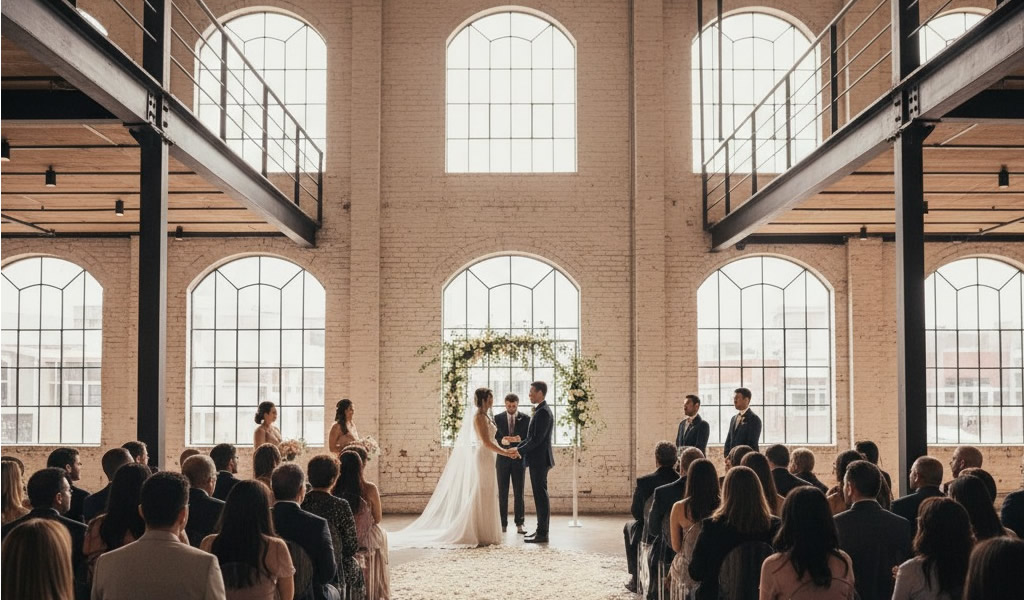
Industrial & Minimalist Wedding Venues in Denver, Colorado
There is something particularly sophisticated about an industrial wedding venue. Instead of starting with a traditional ballroom and adding decorations until it looks like a wedding, an industrial space begins with architecture that already has a personality of its own. Exposed brick, steel beams, concrete floors, enormous windows, high ceilings and historic structural details create a visual foundation that can be transformed without being completely covered. For couples getting married in Denver, Colorado, this aesthetic is especially appealing because the city has developed a strong relationship with architecture, art, adaptive reuse and contemporary design. Neighborhoods such as RiNo and the Santa Fe Arts District offer an urban atmosphere where historic buildings and modern creativity coexist, creating an environment that feels very different from a conventional wedding destination.
The beauty of an industrial wedding is that it does not necessarily have to look rustic, unfinished or overly masculine. In fact, some of the most elegant weddings can take place inside buildings that were never originally intended to host weddings. The contrast is what creates the visual interest. A sophisticated wedding dress against an exposed brick wall, delicate floral arrangements surrounded by steel and concrete, long tables illuminated by warm pendant lights and carefully selected furniture can produce an atmosphere that feels contemporary without becoming cold. For couples who want a wedding that feels modern, architectural and distinctly connected to the personality of Denver, an industrial venue can provide a much more memorable starting point than a traditional ballroom.
What Makes a Wedding Venue Industrial?
An industrial wedding venue generally occupies a building or space that was originally designed for manufacturing, commercial activity, storage or another utilitarian purpose. Rather than completely concealing the history of the building during renovation, these venues preserve architectural elements that communicate where the structure came from. Brick walls may remain exposed, steel columns may become part of the interior design, large factory-style windows may provide natural light and high ceilings may create a dramatic sense of scale. The result is a space where the architecture itself becomes one of the most important decorative elements.
That distinction is important because industrial and rustic are not the same aesthetic. A rustic wedding often emphasizes wood, natural textures, barns, greenery and a connection with the countryside. An industrial wedding tends to be more urban and architectural, with harder materials and stronger geometric lines. In Denver, these characteristics work particularly well because the city offers a combination of historic buildings and contemporary cultural spaces that allow couples to create a wedding that feels sophisticated without becoming excessively formal.
What Does Minimalist Mean in a Wedding?
Minimalism is not simply about having fewer decorations. It is about making deliberate choices and allowing the most important elements to have enough space to be appreciated. A minimalist wedding might use a restrained color palette, elegant furniture, simple floral arrangements and carefully chosen table details, but that does not mean the celebration needs to feel empty or unfinished. The idea is to remove unnecessary visual noise so that the architecture, the couple and the atmosphere become more important than the quantity of decoration.
This approach can be particularly effective inside an industrial building because the venue may already provide considerable visual interest. Exposed brick, concrete, steel and large windows can create texture and depth without requiring additional decoration. Instead of asking what can be added to every empty wall or corner, a minimalist design asks a more interesting question: what is already beautiful about this space, and how can the wedding design make those characteristics more noticeable?
Why Denver Works So Well for Industrial Weddings
Denver has an unusually interesting combination of historic architecture and contemporary culture. The city has experienced significant redevelopment over the years, and former industrial and commercial buildings have found new lives as restaurants, creative spaces, offices, galleries and event venues. This has created opportunities for couples who want a wedding environment that feels urban and contemporary rather than traditional.
The character of neighborhoods such as RiNo and the Santa Fe Arts District contributes to that appeal. These areas are associated with art, design, restaurants, breweries and creative businesses, so the wedding experience can extend beyond the walls of the venue. For a couple who wants guests to experience Denver rather than simply arrive at a ballroom, that distinction can be meaningful. The location becomes part of the story of the wedding, particularly for guests traveling from outside Colorado.
Moss Denver and the Modern Industrial Aesthetic
Moss Denver is an excellent example of how an industrial building can be transformed into a contemporary wedding environment without losing its architectural identity. Located in the Santa Fe Arts District, the venue incorporates characteristics such as exposed rafters, factory-style windows and polished concrete floors while providing an environment designed specifically for events. The architecture gives the room an immediate personality, which means the couple can use relatively restrained decoration without making the space feel incomplete.
This type of venue can be particularly attractive to couples who want a minimalist wedding because the building itself becomes part of the design. Instead of spending a significant portion of the decoration budget attempting to create an atmosphere from scratch, the couple can concentrate on elements that actually change the experience, such as lighting, flowers, furniture, linens and the overall flow of the reception. The result can feel sophisticated precisely because it does not attempt to cover every surface.
Ironworks and Historic Industrial Character
Ironworks offers another interpretation of Denver’s industrial wedding aesthetic. Located on Larimer Street, the venue occupies a historic building that combines original architectural characteristics with contemporary event amenities. Its industrial elements provide texture and visual depth, while the additional event spaces allow couples to create a celebration that moves between different environments.
For a wedding designer, spaces like this are interesting because the architecture does some of the work. Exposed brick and historic structural details establish the visual language, while flowers, furniture and lighting can introduce the softness that a wedding requires. The result does not have to look like a converted warehouse. With the right design choices, it can feel refined, romantic and distinctly Denver.
Mile High Station and Large Industrial Weddings
Mile High Station demonstrates how industrial architecture can also work for larger celebrations. The venue combines original industrial elements such as exposed brick and steel with contemporary event features, creating a space capable of supporting both the architectural character of the building and the practical requirements of a substantial wedding reception.
For couples with a larger guest list, this type of venue can be particularly appealing because the scale of the architecture provides drama without requiring excessive decoration. A high ceiling, exposed structural elements and large open spaces naturally create a sense of occasion. Instead of filling the room with decorative installations, the wedding can use lighting, furniture and carefully positioned floral arrangements to define different areas and guide guests through the celebration.
The Appeal of RiNo for a Denver Wedding
The River North Art District, better known as RiNo, has become one of the areas couples should consider when searching for a contemporary wedding experience in Denver. Its combination of art, restaurants, breweries, creative businesses and repurposed architecture gives the neighborhood an identity that feels distinctly urban. A wedding held in this environment can feel less like a conventional formal event and more like a celebration connected to the city itself.
That is particularly valuable for destination weddings. Guests traveling to Denver are not only attending the ceremony and reception; they are experiencing a city. Staying in nearby hotels, visiting restaurants, exploring galleries or walking through the surrounding neighborhoods can become part of the weekend. An industrial wedding venue in an area such as RiNo can therefore contribute to the destination experience in a way that a venue isolated from the city might not.
The Santa Fe Arts District and Creative Weddings
The Santa Fe Arts District offers another compelling environment for couples interested in industrial or minimalist wedding design. The area’s connection to galleries, studios and contemporary art gives it a creative atmosphere that works naturally with modern wedding aesthetics. A couple who wants a celebration that feels artistic without becoming overly themed can take advantage of that environment.
Photography is another reason this type of location can be attractive. The architecture and surrounding streets can provide a variety of backgrounds without requiring the couple to spend the entire day traveling between locations. The wedding venue can provide dramatic interior portraits, while nearby architecture and urban spaces can offer something completely different for photographs taken before or after the ceremony.
How to Decorate an Industrial Wedding Venue
One of the biggest mistakes couples can make with an industrial venue is assuming that every visible surface needs decoration. In many cases, the opposite is true. If a building has beautiful exposed brick, covering it with fabric may actually reduce its impact. If the ceiling contains dramatic steel beams, there may be no reason to hide them behind elaborate installations. If large windows provide beautiful natural light, the room may be more impressive when the windows remain visually unobstructed.
A more sophisticated approach is to identify the architectural elements that already make the venue interesting and then design around them. Flowers can introduce softness, candles can provide warmth, textiles can add richness and furniture can define the space. Instead of competing with the building, these elements create a conversation between the architecture and the wedding.
Lighting Is One of the Most Important Design Decisions
Lighting can completely transform an industrial wedding venue. During the day, large windows and natural light may emphasize the texture of brick, concrete and steel, creating a bright and contemporary atmosphere. After sunset, however, the same room can feel dramatically different. This is when warm lighting becomes particularly important.
Pendant lights, candles, chandeliers and carefully positioned architectural lighting can soften hard materials and make a large industrial space feel intimate. The objective is not to eliminate the industrial character but to balance it. Steel and concrete can remain visible while warm light introduces a sense of comfort and romance. For an evening wedding in Denver, this contrast can be particularly beautiful.
Choosing Flowers for an Industrial Minimalist Wedding
Flowers are one of the easiest ways to introduce organic texture into an industrial environment. A delicate arrangement can look dramatically different when placed against exposed brick or concrete because the contrast makes both elements more noticeable. This means a minimalist wedding does not necessarily require fewer flowers; it requires flowers to be used intentionally.
Instead of placing small arrangements on every available surface, a couple might choose several substantial floral moments and allow the surrounding architecture to remain visible. White and neutral flowers can create an understated and sophisticated appearance, while deeper colors such as burgundy, rust, terracotta or dark green can introduce contrast and warmth. The right choice depends on the season, the venue and the overall visual direction of the wedding.
Industrial Weddings and Wedding Photography
Industrial venues can be exceptionally interesting for wedding photography because they offer texture, geometry and contrast. Brick walls create depth, steel beams create strong lines and large windows can provide beautiful natural light. The architectural environment can also create a striking contrast with the softness and elegance of a bridal gown.
This gives the photographer opportunities to create photographs that feel different from traditional ballroom portraits. A bride standing beneath exposed steel beams or beside a large factory-style window can create an image that feels contemporary and editorial. The venue becomes more than a backdrop; it becomes part of the composition.
For couples who value photography, this is one of the strongest arguments for choosing an industrial space. You are not simply selecting a room for the reception. You are selecting an environment that will appear repeatedly in the visual record of your wedding.
Your Wedding Dress and the Industrial Aesthetic
The wedding dress does not have to match the venue, and in many cases, it is more beautiful when it does not. A minimalist crepe gown against an exposed brick wall can create a sophisticated contrast between softness and architecture. A structured satin dress can emphasize the geometric qualities of the building, while a romantic lace gown can introduce delicate texture against concrete and steel.
The important thing is proportion. An industrial venue often has strong architectural lines and large visual surfaces, so the silhouette of the gown becomes an important part of the composition. This is one reason contemporary bridal fashion can work particularly well in these environments. Clean lines, structured silhouettes and carefully fitted gowns can complement the architecture without competing with it.
Why Wedding Dress Alterations Are Especially Important
Minimalist bridal fashion can appear simple, but simplicity makes precision even more important. When a wedding dress does not contain extensive embellishment, the silhouette becomes the primary design element. A hem that is too long, a bodice that does not sit correctly or a waistline that does not follow the bride’s proportions can become much more noticeable.Professional wedding dress alterations can therefore have a significant effect on the final appearance of a minimalist gown. The objective is not simply to make the dress smaller or shorter. It is to refine the proportions so that the gown follows the bride’s body correctly and remains comfortable throughout the wedding day.
This becomes especially important when the wedding includes extensive photography. A gown that fits correctly will photograph differently from one that constantly requires adjustment. The bride should be able to walk, sit, dance and move naturally without thinking about whether the dress is in the correct position.
Making an Industrial Venue Feel Warm
Industrial materials can sometimes be perceived as cold, but the atmosphere of the finished wedding depends much more on the combination of materials than on any individual surface. Concrete can feel warm when surrounded by candlelight. Steel can feel elegant when paired with soft fabrics. Brick can feel romantic when combined with flowers and warm lighting.This is where good wedding design becomes less about decoration and more about balance. Hard architectural materials can be contrasted with soft textiles. Straight architectural lines can be balanced with organic floral arrangements. Large open spaces can be divided into intimate areas through furniture and lighting.
The result is an environment that feels sophisticated without becoming sterile.
Industrial Weddings During the Colorado Winter
An industrial venue can be particularly beautiful during a Denver winter wedding. The contrast between the cold environment outside and a warm interior filled with candles, flowers and soft lighting can create a naturally intimate atmosphere. The architectural character of the building can become even more dramatic when the celebration takes place primarily indoors.
Winter also allows couples to explore richer textures and colors. Velvet, wool-inspired textiles, deeper floral tones and warm lighting can complement exposed brick and dark architectural elements beautifully. The wedding dress can also incorporate seasonal elements through sleeves, layers, textured fabrics or accessories without abandoning a minimalist silhouette.
Summer Weddings in Industrial Venues
Summer creates a completely different opportunity. If the venue includes a patio, courtyard or outdoor area, couples can use the transition between indoor and outdoor spaces to create a more dynamic guest experience. Cocktails might begin outside while the ceremony or dinner takes place indoors, allowing the wedding to evolve naturally as the day progresses.
This approach can be particularly useful in Denver because the city’s summer climate encourages outdoor gatherings while still allowing couples to benefit from the architectural character of an indoor venue. Instead of choosing between an urban indoor wedding and an outdoor celebration, couples can combine elements of both.
What Couples Should Consider Before Booking
The architecture may be what makes you fall in love with an industrial venue, but the practical details should determine whether it is actually right for your wedding. Before signing a contract, consider how much setup time is included, what furniture and equipment are provided, whether outside vendors are permitted, how catering works, what restrictions apply to decoration and lighting, and how the venue handles sound, parking and guest access.
This is particularly important with industrial spaces because they can vary considerably in what they provide. Some operate almost entirely as blank canvases, meaning that the couple may need to bring in furniture, rentals, lighting and other elements. Others provide a much more complete event infrastructure. The difference can significantly affect the final budget and the amount of logistical planning required.
A beautiful venue is only truly beautiful when it also works for the people who are going to use it.
Think About Your Guests, Not Only the Photographs
It is easy to fall in love with a venue because of its photographs. Industrial architecture can look spectacular online, but the real test is how guests experience the building during a long wedding day.Consider how easy it is to reach the venue, where guests will park or be dropped off, whether the space is comfortable for older relatives, how the climate control works and how far the venue is from nearby hotels. Think about the movement between the ceremony, cocktail hour and reception. If the wedding is taking place during a particularly warm or cold season, make sure the venue can maintain a comfortable environment throughout the celebration.
These details rarely appear in Instagram photographs, but they are part of what makes a wedding memorable for the people attending it.
Industrial Venue or Traditional Ballroom?
The decision ultimately comes down to the atmosphere you want to create. A traditional ballroom offers a polished environment that already resembles a conventional wedding setting, which can make the design process relatively straightforward. An industrial venue offers something different: architectural personality, visual texture and the opportunity to create a wedding that feels more connected to the city.
Neither option is inherently superior. A ballroom may be perfect for a couple who wants classic elegance, while an industrial venue may be ideal for someone who wants a contemporary celebration with a stronger sense of place.
The important thing is to choose the environment that supports the story you want your wedding to tell.
The Venue Should Support the Wedding, Not Compete With It
The strongest industrial weddings understand that the architecture is a foundation rather than the main attraction. Exposed brick, steel and concrete can be beautiful, but the purpose of the venue is ultimately to provide an environment for the couple and their guests to celebrate together.This is where minimalist design becomes particularly powerful. Instead of trying to impress guests with the number of decorations in the room, the design focuses on creating an atmosphere. The lighting feels intentional, the flowers have enough room to breathe, the tables feel elegant and the architecture remains visible.
Nothing feels accidental, but nothing feels excessive either.
Final Thoughts on Industrial and Minimalist Wedding Venues in Denver
Denver is an excellent destination for couples who want an industrial or minimalist wedding because the city offers a combination of historic architecture, contemporary design and creative neighborhoods that can give a celebration a distinctive sense of place. From restored industrial buildings to modern event spaces, venues throughout areas such as RiNo and the Santa Fe Arts District demonstrate how architecture can become one of the most important elements of a wedding design.The most successful industrial weddings do not try to turn a warehouse into a traditional ballroom. They understand what makes the building interesting and allow those characteristics to remain visible. Exposed brick becomes texture, steel beams become architectural lines, large windows become natural lighting and concrete floors become part of the visual composition.
The wedding design then adds the elements that architecture cannot provide: warmth, flowers, beautiful furniture, candlelight, music, personal details and, most importantly, the people who give the celebration its meaning.
For the bride, the same philosophy can extend to the wedding dress. A well-fitted gown, carefully considered alterations and a silhouette that works naturally with the venue can create an extraordinary visual relationship between the bride and the architecture around her. The result does not have to be extravagant to be memorable.
Sometimes the most sophisticated wedding is the one that understands when to stop adding.
An industrial minimalist wedding in Denver can be elegant without being traditional, contemporary without feeling cold and visually striking without becoming excessive. It is a style that gives couples room to express their personality while allowing the architecture of the city to become part of their wedding story.
And that may be the greatest advantage of choosing an industrial venue in Denver: you are not simply renting a room for your wedding. You are choosing a piece of the city to become part of the memory.