
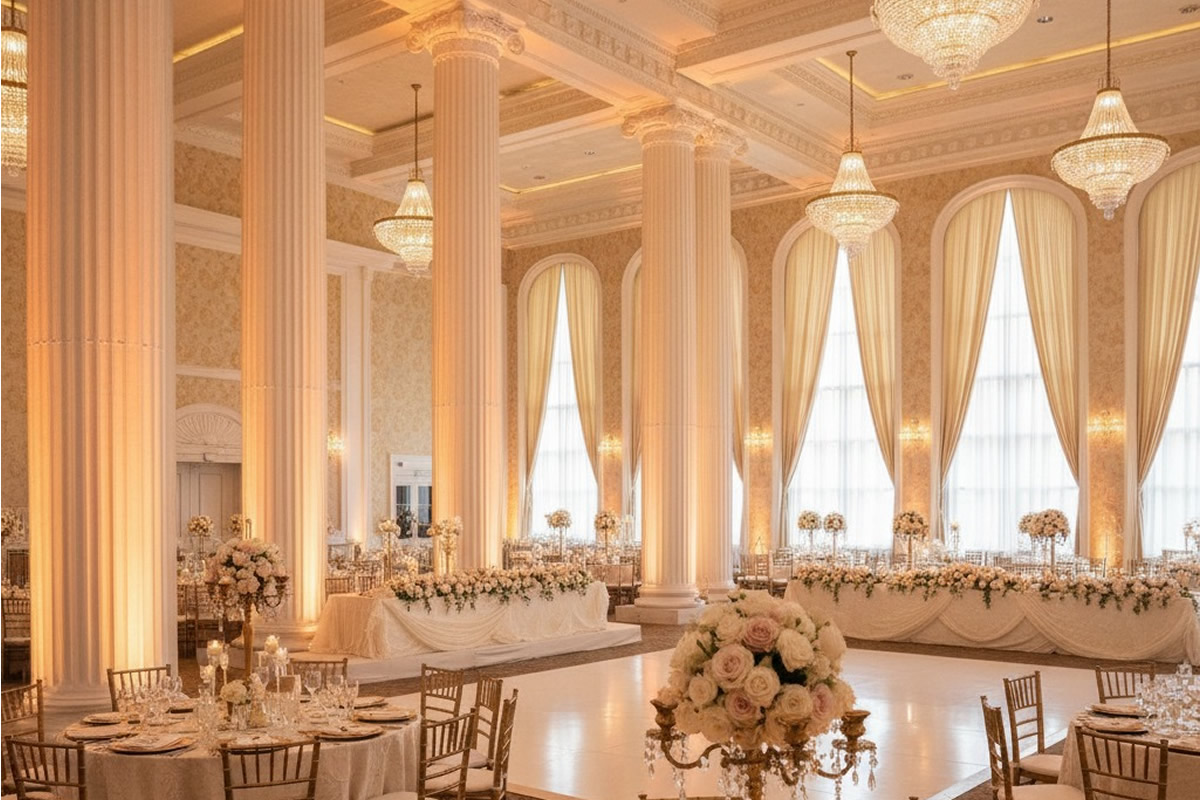
Indoor Wedding Photography Lighting in Denver
When couples imagine their wedding photographs, they often picture dramatic Colorado landscapes, mountain views and golden-hour portraits beneath a wide open sky. Denver certainly offers those possibilities, but some of the most meaningful wedding photographs happen indoors. The moment a bride gets ready with her family, the first look inside a quiet room, the ceremony beneath elegant chandeliers or the first dance surrounded by friends can all become some of the most memorable images of the entire wedding day.
That is why indoor wedding photography lighting deserves just as much attention as the choice of venue, dress or photography style. In Denver, where wedding celebrations can take place in elegant downtown ballrooms, historic buildings, boutique hotels, industrial spaces and venues with dramatic architectural details, photographers often have to work with very different lighting conditions throughout the same day.
The quality of the final photographs is not determined simply by how much light exists in a room. It depends on the direction, intensity, color and quality of that light, as well as how the photographer combines available light with professional equipment. Understanding these elements can help couples make better decisions when choosing their venue, planning the wedding timeline and working with their photographer.
Why Indoor Wedding Photography Lighting Matters
Light is one of the fundamental elements of photography. It influences exposure, skin tones, shadows, contrast, color and the overall emotional character of an image. Two rooms with exactly the same wedding decorations can produce completely different photographs simply because the lighting is different.An indoor wedding can present several challenges. A ballroom may have beautiful chandeliers but very little natural light. A historic venue may have large windows that create dramatic illumination during the day but become much darker after sunset. An industrial venue may have high ceilings and architectural details that require a different lighting strategy altogether.
Denver offers a particularly diverse range of wedding environments. Local venues include elegant downtown ballrooms, historic buildings, urban-industrial spaces and hotels with indoor areas designed around natural light. VISIT DENVER, for example, highlights venues ranging from Denver Union Station and the Brown Palace Hotel to urban spaces such as Mile High Station and boutique hotels throughout the city.
For a wedding photographer, each of these environments requires a different approach.
Natural Light vs. Artificial Light for Wedding Photography
One of the first considerations during an indoor wedding is whether to rely primarily on natural light, artificial lighting or a combination of both.
Natural light coming through windows can create beautiful, soft photographs, particularly when it is diffused by curtains or when the room receives indirect daylight. It can be ideal for bridal portraits, getting-ready photographs and intimate moments because it often produces natural-looking skin tones and gentle shadows.Artificial lighting becomes increasingly important as the wedding day progresses. Once the sun begins to set, the photographer needs to maintain consistent exposure and color while still preserving the atmosphere of the room.
The best wedding photography does not necessarily choose one type of light over the other. Instead, an experienced photographer understands how to combine them.
How Denver’s Indoor Venues Affect Wedding Photography
The architecture of the venue plays a significant role in determining how photographs will look.
A ballroom with high ceilings and large chandeliers may create an elegant atmosphere, but the photographer needs to consider how those light sources affect skin tones and shadows. A venue with exposed brick and industrial architecture can create a dramatic editorial aesthetic, while a hotel ballroom with neutral walls may produce a softer and more classic appearance.Historic venues can be especially interesting because architectural details become part of the composition. Denver Union Station, for example, is a historic Beaux-Arts landmark with opulent chandeliers and a large main hall, creating an environment where the architecture itself can become part of the wedding photographs.
Mile High Station offers a completely different visual environment, with original brick walls, exposed steel construction, high ceilings and large chandeliers. Those architectural elements can create beautiful depth and texture in photographs when the lighting is carefully controlled.
This is why couples should think about photography when selecting a venue. The room is not simply where the wedding takes place; it becomes part of the visual story.
The Importance of Window Light
Windows are one of the most valuable natural light sources available to a wedding photographer.
Large windows can create soft illumination that works beautifully for bridal portraits, getting-ready photographs and emotional moments between family members. However, the direction and intensity of the light are important.A bride standing directly in front of a bright window can become underexposed if the photographer does not compensate for the difference between the subject and the background. Conversely, positioning the bride slightly to the side of the window can create dimensional light across the face.
The photographer may also use curtains, sheer panels or reflectors to soften harsh daylight.
For couples planning an indoor wedding in Denver, asking about the location and size of the venue’s windows can therefore be surprisingly useful when evaluating a space.
What Happens When the Sun Goes Down?
Denver’s natural light changes throughout the wedding day, which means an indoor photographer needs to adapt continuously.
Getting-ready photographs may take place in bright daylight, while the ceremony happens during late afternoon and the reception continues after sunset. A lighting setup that works beautifully at 3 p.m. may be completely inadequate several hours later.Professional photographers typically prepare for these transitions by carrying equipment that allows them to maintain consistent image quality regardless of the available light.
Flash, off-camera lighting, bounced light and other techniques can be used to create flattering illumination while preserving the atmosphere of the venue.
The objective is not to make every photograph look as though it was taken in a studio. It is to make sure that the lighting supports the moment rather than distracting from it.
Flash Photography Does Not Have to Look Harsh
Many couples hear the word “flash” and immediately imagine bright, flat photographs with hard shadows. Modern wedding photography can use flash very differently.Rather than pointing a flash directly at the couple, photographers can bounce light from ceilings or walls, use diffusers or position lights away from the camera. This can create softer and more dimensional illumination.
Off-camera flash can also be used to create a more dramatic editorial appearance during portraits or reception photographs.
The technique depends on the style of the wedding and the photographer’s creative approach. A romantic wedding may call for soft, diffused illumination, while a modern downtown Denver reception may work beautifully with more directional light and deeper shadows.
How to Photograph a Wedding in a Dark Ballroom
Dark ballrooms are common in evening receptions, and they can be challenging because the photographer needs to balance the existing atmosphere with sufficient exposure on the couple.Increasing the camera’s ISO can help capture more ambient light, but excessive reliance on high ISO settings can introduce unwanted noise. A wider aperture can allow more light into the lens, although depth of field becomes narrower.
Artificial lighting provides another solution.
A photographer may use strategically positioned lights to illuminate the dance floor, speeches or first dance while allowing the background to remain visible. This creates a sense of depth and preserves the atmosphere of the room rather than turning the background into a completely dark space.
The result can be especially effective in Denver’s more dramatic wedding venues, where architecture and interior design are important parts of the visual experience.
Color Temperature Is One of the Hidden Challenges
Indoor wedding venues often contain multiple types of artificial lighting at the same time.
A chandelier may produce one color of light, while recessed ceiling lights, wall fixtures and DJ lighting produce completely different colors. If these sources are not managed properly, skin tones can become inconsistent from one photograph to another.Professional photographers pay attention to color temperature, usually measured in Kelvin, and adjust their camera settings and lighting equipment accordingly.
This becomes particularly important when a wedding combines natural daylight with artificial interior lighting. Daylight may appear cooler while incandescent or tungsten lighting tends to appear warmer.Rather than eliminating every difference, a photographer can decide which light sources should dominate the image and use that decision intentionally.
Photographing the Wedding Dress Indoors
The wedding dress deserves special consideration when working with indoor lighting.White fabrics can easily lose detail when they are exposed to strong light, particularly when the gown contains lace, embroidery, beading or subtle texture. At the same time, insufficient light can make the dress appear gray or dull.
A skilled photographer looks for light that reveals the texture of the gown rather than simply making it bright.Side lighting can emphasize lace and embroidery. Soft window light can reveal subtle fabric textures. Directional artificial light can create dimension in a dramatic bridal portrait.
For brides who have invested in a custom gown or professional wedding dress alterations, these details are especially important because the photographs should capture the craftsmanship and fit of the dress.
Lighting for Bridal Portraits
Bridal portraits are often among the most carefully composed photographs of the wedding day.
Indoor portraits can be particularly beautiful when the photographer finds a location with controlled natural light, interesting architecture or a combination of both.A bride standing near a large window can be photographed using soft side light, creating subtle dimension across the face and gown. Moving her only a few feet can completely change the quality of the light.
The photographer may also use reflectors or additional lighting to control shadows and create the desired mood.
In an elegant Denver hotel, this might produce a classic editorial portrait. In a historic or industrial venue, the same principles can create something much more dramatic.
Lighting the Ceremony
Wedding ceremonies often present unique lighting challenges because the photographer must work without disrupting the moment.
Flash may be restricted or discouraged during the ceremony, depending on the venue and officiant. In those situations, the photographer needs to rely more heavily on available light and camera settings.This is where fast lenses, appropriate exposure settings and an understanding of the venue become important.
The photographer also needs to anticipate where the most important moments will occur. The entrance of the bride, the exchange of rings, the first kiss and the recessional can all take place in different areas of the room.
A good lighting strategy considers the entire ceremony rather than focusing on one position.
Reception Lighting and the First Dance
The reception introduces another layer of complexity because the lighting environment often changes dramatically.DJ lights, candles, chandeliers, uplighting and decorative installations may all be operating simultaneously. During the first dance, the photographer needs to capture both the couple and the atmosphere surrounding them.
This is an excellent opportunity for creative lighting.
Backlighting can separate the couple from the background. Off-camera flash can add dimension. Ambient light can preserve the mood created by candles and decorative fixtures.
The best images often combine these elements rather than eliminating them.
Candles, Chandeliers and Decorative Lighting
Wedding lighting is not only functional. It is also part of the design.Candles can create warmth and intimacy. Chandeliers can provide elegant highlights. String lights can create a romantic atmosphere, while colored uplighting can dramatically change the appearance of an entire room.
A photographer should not automatically overpower these sources with flash.
Instead, the ambient lighting can become part of the photograph.Denver wedding venues offer many different architectural and decorative environments. The Magnolia Ballroom, for example, is known for its sophisticated atmosphere and distinctive use of color and lighting, while other venues emphasize historic architecture or modern industrial design.
Understanding how to photograph these environments is part of what separates technical photography from visual storytelling.
How to Prepare Your Wedding Photographer for an Indoor Venue
One of the best things a couple can do is give the photographer as much information as possible before the wedding.Share photographs of the venue, discuss the approximate timeline and identify which rooms will be used for getting ready, the ceremony and reception.
If possible, schedule a venue walkthrough with your photographer.
This allows the photographer to evaluate window placement, ceiling height, available ambient light, wall colors and potential locations for portraits. It also provides an opportunity to identify difficult areas before the wedding day.
A venue that looks beautiful during a daytime tour may look completely different after sunset, so understanding the timeline is essential.
Should You Consider Lighting When Choosing a Denver Wedding Venue?
Absolutely.
Couples often evaluate a venue based on capacity, location, food, architecture and overall atmosphere, but photography should also be part of the decision.If photographs are an important part of your wedding memories, pay attention to the available natural light, the color of the walls, ceiling height, architectural details and how the space looks after dark.
Denver offers an unusually broad range of wedding environments, from mountain-view locations and historic buildings to boutique hotels and urban-industrial venues. VISIT DENVER specifically highlights the diversity of wedding venues available throughout the city and metro area.
A venue with beautiful architecture and thoughtful lighting can give your photographer considerably more creative possibilities.
Indoor Wedding Photography in Denver Can Be Just as Beautiful as Outdoor Photography
Colorado is famous for its mountains and spectacular outdoor scenery, but an indoor wedding does not mean giving up beautiful photographs.
In fact, indoor spaces can provide something that outdoor locations cannot always offer: controlled environments, architectural depth, dramatic shadows, elegant interiors and intimate moments that feel connected to the atmosphere of the celebration.
The key is understanding light.
Whether the wedding takes place in a downtown Denver ballroom, a historic building, a boutique hotel, an industrial venue in RiNo or a location closer to the foothills, the photographer needs to understand how the available light interacts with the couple, the dress, the architecture and the emotions of the day.
Final Thoughts
Beautiful wedding photography is not simply about having enough light. It is about understanding how light shapes the photograph.
Natural window light can create softness and intimacy. Flash can add dimension and consistency. Ambient lighting can preserve the atmosphere of the reception. Architectural lighting can transform a venue into part of the story. For Denver couples, this becomes especially important because the city offers such a diverse collection of wedding venues and visual environments. From historic interiors and elegant ballrooms to contemporary hotels and industrial spaces, every venue presents its own opportunities and challenges for photography.
The best approach is to work with your photographer before the wedding day, understand the lighting conditions at your venue and build enough flexibility into the timeline to take advantage of beautiful natural light when it is available.
After all, your wedding photographs are not simply records of what happened. They are the visual memory of how the day felt, and thoughtful lighting is one of the most powerful tools a photographer has to preserve that feeling.