
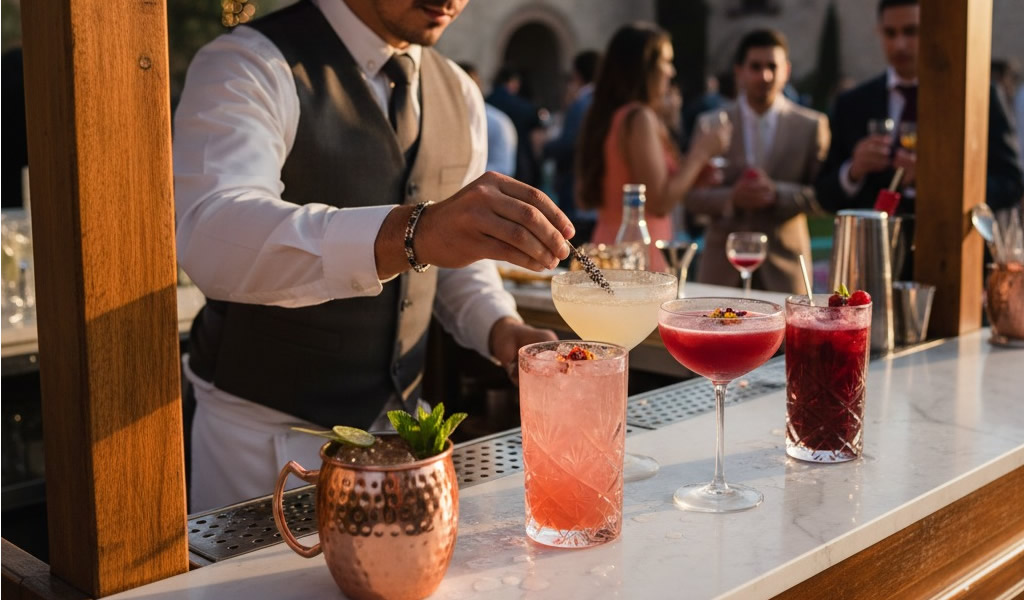
Wedding Mixology: A Complete Guide to Creating an Exceptional Cocktail Experience
The bar has become one of the most important elements of a modern wedding. For many couples, it is no longer enough to offer a selection of beer, wine and a few traditional cocktails throughout the reception. Today’s weddings increasingly treat beverages as part of the overall culinary experience, with carefully designed cocktail menus, professional bartenders, fresh ingredients and drinks created specifically around the personality of the couple.
This is where wedding mixology becomes particularly interesting. Unlike a conventional open bar, where guests simply choose from a predetermined selection of beverages, mixology brings a more intentional approach to the cocktail experience. Ingredients, presentation, glassware, aromas, colors and preparation techniques can all become part of the celebration. The result is a bar experience that feels connected to the wedding rather than simply operating in the background.For couples planning a wedding in Mexico, Colorado, the United States or another destination, professional mixology can also become a way to introduce guests to the character of the location. Local ingredients, regional spirits and seasonal flavors can give the cocktail menu a sense of place while still maintaining the elegance expected at a wedding.
The most successful wedding cocktail programs are not necessarily the ones with the longest menus. They are the ones that understand the couple, the venue, the season and the guests, and then turn those elements into a beverage experience that feels natural and memorable.
What Is Wedding Mixology?
Wedding mixology is the professional creation and service of cocktails specifically designed for a wedding celebration. It combines traditional bartending with elements of cocktail design, culinary technique and hospitality.A mixologist considers much more than the alcohol in a drink. The balance between sweet, sour, bitter and aromatic elements is important, but so are the ingredients, temperature, texture, presentation and way the cocktail is served.
This approach allows couples to move beyond generic drinks and create cocktails that actually have a relationship with the wedding.
A signature cocktail might reflect the couple’s favorite flavors, the destination where they met, the season of the wedding or even a meaningful moment in their relationship.
Why Mixology Has Become So Popular at Weddings
Modern weddings are increasingly focused on creating experiences rather than simply following a traditional sequence of events. Guests are invited to participate, explore and discover different elements of the celebration.Food stations are one example of this trend. Interactive entertainment is another. Wedding mixology fits naturally into the same philosophy because the bar becomes an experience rather than simply a place where guests pick up a drink.
Watching a bartender prepare a cocktail with fresh herbs, citrus, smoke, spices or other ingredients can create a small moment of theater.
It gives guests something to talk about.
And because cocktails are often photographed, the bar can also become part of the visual design of the reception.
The Signature Wedding Cocktail
One of the simplest ways to introduce mixology into a wedding is by creating one or two signature cocktails.
Rather than offering an enormous menu, the couple can select drinks that represent them.
The cocktail might be inspired by a favorite vacation, a particular spirit, a family tradition or simply a combination of flavors they both enjoy.
The name can also become part of the experience.
Some couples choose romantic names, while others use an inside joke or reference a meaningful place.
The objective is not to create a complicated name for marketing purposes.
It is to give the drink a story.
Should You Have One Signature Cocktail or Two?
There is no universal answer.
One signature cocktail can create a stronger identity and simplify service. Two cocktails can allow the couple to represent different preferences or offer guests a choice between contrasting flavor profiles.
For example, one cocktail might be refreshing and citrus-forward, while another could be richer and spirit-forward.
The important thing is to avoid creating a cocktail menu so large that the bar becomes difficult to manage.
At a wedding, efficiency matters.
Guests should be able to receive their drinks without standing in line for several minutes while a bartender performs an elaborate preparation.
Good mixology combines creativity with operational discipline.
Mexican-Inspired Wedding Cocktails
Mexican cuisine offers enormous potential for wedding cocktails because the country has a rich tradition of spirits, fruits, herbs and spices.
Tequila and mezcal are obvious starting points, but the possibilities extend considerably further.
Fresh citrus, hibiscus, tamarind, pineapple, cucumber, prickly pear, mango, passion fruit, chile and herbs can all be incorporated into sophisticated cocktails.
The important distinction is between using Mexican ingredients and simply making a drink extremely sweet or spicy.
A sophisticated Mexican-inspired cocktail should still have balance.
The ingredients should complement one another rather than compete for attention.
Tequila Cocktails for Weddings
Tequila is one of the most versatile spirits for wedding cocktails.
A well-designed tequila cocktail can be bright and refreshing, herbal, spicy, floral or sophisticated and spirit-forward depending on the ingredients.
Classic cocktails such as the Margarita can also be reinterpreted for a wedding.
Instead of a conventional frozen margarita, a mixologist might create a fresh version using high-quality tequila, natural citrus, a carefully balanced sweetener and a subtle garnish.
The difference can be remarkable.
The same basic concept can feel completely different when the ingredients and technique are elevated.
Mezcal Wedding Cocktails
Mezcal offers an entirely different flavor profile.
Its characteristic smokiness can create cocktails with considerable depth, particularly when combined with citrus, tropical fruit or herbal ingredients.
Because mezcal has such a distinctive personality, however, it should be used thoughtfully.
A little can add complexity without dominating the drink.
For couples who enjoy sophisticated cocktails, a mezcal signature drink can be an excellent way to introduce guests to something they may not have tried before.
The Margarita Reimagined
The Margarita is one of the most recognizable Mexican-inspired cocktails in the world, but there is no reason to limit it to the traditional recipe.A wedding Margarita can incorporate seasonal fruit, herbs, subtle spice or floral ingredients while maintaining the basic balance that makes the cocktail work.
A strawberry Margarita, for example, can be elegant when prepared with fresh fruit rather than an overly sweet commercial mix.
A cucumber Margarita can feel particularly refreshing during a summer wedding.
A hibiscus version can introduce color and a distinctly Mexican flavor profile.
The key is quality.
Fresh ingredients make a much greater difference than simply adding more decoration.
Mexican Ingredients in Modern Mixology
One of the most interesting developments in contemporary cocktail culture has been the use of ingredients traditionally associated with food.
Chiles, herbs, spices, fruits and floral ingredients can create unexpected combinations.
For a wedding, this provides an opportunity to create drinks that guests remember.
A cocktail featuring tequila, fresh citrus and a subtle chile infusion can create heat without overwhelming the palate. A mezcal cocktail with pineapple and herbs can balance smoke with sweetness and acidity.
The possibilities become almost limitless when the mixologist approaches the bar with the same creativity that a chef brings to a kitchen.
Seasonal Wedding Cocktails
The season of the wedding should influence the cocktail menu.Summer weddings naturally lend themselves to refreshing drinks featuring citrus, cucumber, berries, watermelon, herbs and lighter spirits.Fall weddings can incorporate apples, pears, cinnamon, ginger, maple and other warmer flavors.
Winter celebrations can benefit from richer cocktails featuring spices, chocolate, coffee or warming spirits.
Spring creates opportunities for floral ingredients, fresh herbs and lighter fruit combinations.
Seasonality does more than provide inspiration.
It can also improve the quality of the ingredients and help the cocktail menu feel connected to the time of year.
Cocktails for a Summer Wedding
Summer weddings often require a different approach to beverage service because guests may spend considerable time outdoors.
Refreshing cocktails are generally more appropriate than extremely heavy or spirit-forward drinks.
Citrus, cucumber, mint, berries and tropical fruit can create drinks that feel bright and refreshing.
Frozen cocktails can also be appealing, particularly for casual outdoor celebrations, although they may not be appropriate for every formal wedding.
The venue and overall wedding aesthetic should guide the decision.
A sophisticated rooftop wedding and a relaxed beach celebration may both take place during summer, but they may require completely different cocktail programs.
Cocktails for a Winter Wedding
Winter weddings create opportunities for a completely different beverage experience.
Warm cocktails, spiced flavors, coffee-based drinks and richer spirits can make the bar feel like part of the atmosphere.
A cocktail featuring cinnamon, vanilla, chocolate or orange can feel particularly appropriate during a winter reception.
This does not mean every drink needs to be hot.
A balanced menu can include both refreshing cocktails and richer options so that guests can choose according to their preferences.
Wedding Cocktails for a Colorado Celebration
Colorado provides a particularly interesting environment for wedding mixology because the state combines urban celebrations with mountain and outdoor weddings.A wedding in Denver may call for a contemporary cocktail menu that reflects the city’s restaurant and craft-cocktail culture.A mountain wedding can incorporate ingredients and flavors that feel connected to the landscape, such as herbs, berries or subtle wood-inspired notes.
The key is not to create a stereotypical “Colorado cocktail.”
Instead, the menu can take inspiration from the location while remaining sophisticated and personal.
Denver Wedding Mixology
Denver’s modern food and beverage culture makes it an interesting destination for couples who care about cocktails.A sophisticated Denver wedding might incorporate locally inspired ingredients, craft spirits and contemporary cocktail techniques while maintaining an elegant presentation.
For destination weddings, this can also become an opportunity for guests to experience something associated with Colorado.
The cocktail menu becomes part of the destination itself.
Mountain Wedding Cocktails
Mountain weddings create a natural connection between cocktails and the environment.
Fresh herbs, berries, citrus, honey and subtle spice can all work beautifully in a mountain setting.
For an evening reception, a cocktail featuring whiskey, honey and citrus can feel warm and sophisticated.
For a summer mountain wedding, a lighter drink featuring gin, herbs and fresh fruit might be more appropriate.
The objective is to create harmony between the drink and the setting without making the concept overly literal.
Destination Wedding Mixology
Destination weddings offer perhaps the greatest opportunity for creative cocktail design because the location itself becomes part of the story.
A wedding in Mexico can introduce guests to tequila, mezcal and regional ingredients.
A wedding in Colorado can explore local spirits and mountain-inspired flavors.
A coastal destination might emphasize fresh citrus, tropical fruit and lighter cocktails.
The cocktail menu can therefore become a small culinary introduction to the destination.
This is particularly valuable when many guests are traveling from another country or region.
The Non-Alcoholic Cocktail Experience
A sophisticated wedding bar should not assume that every guest wants alcohol.
Non-alcoholic cocktails, sometimes called mocktails, have become an increasingly important part of modern beverage programs.
A well-designed non-alcoholic cocktail should not feel like a compromise.
Fresh fruit, herbs, citrus, spices, botanical ingredients and sophisticated garnishes can produce drinks with complexity and visual appeal.
The best approach is to give non-alcoholic drinks the same level of attention as alcoholic cocktails.
They should appear on the menu as intentional choices rather than as secondary alternatives.
Why Mocktails Matter at Weddings
There are many reasons guests may choose not to drink alcohol.Some may be driving, others may be pregnant, some may simply prefer non-alcoholic beverages, and others may want to alternate between alcoholic and non-alcoholic drinks throughout the evening.
Providing genuinely interesting alternatives makes the wedding more inclusive.
It also encourages responsible drinking without making the subject feel restrictive.
A guest should be able to order an elegant non-alcoholic cocktail and feel that they are participating in the same experience as everyone else.
The Cocktail Hour
Cocktail hour is one of the best opportunities to introduce wedding mixology.
Guests have just arrived from the ceremony, conversations are beginning and the atmosphere is relaxed.
This is the perfect moment for a signature cocktail or a small selection of carefully designed drinks.
The cocktail hour can also include passed appetizers and food stations that complement the drinks.
For example, a citrus-forward tequila cocktail can work beautifully with seafood appetizers, while a smoky mezcal cocktail might pair with grilled or spicy dishes.
When the food and drinks are designed together, the entire reception feels more cohesive.
Pairing Cocktails With Wedding Food
Cocktail pairing is not only for restaurants.
It can be incorporated into a wedding menu as well.
The basic principle is to consider how the flavors interact.
Acidic cocktails can refresh the palate after rich foods. Herbal cocktails can complement fresh vegetables and lighter dishes. Smoky drinks can work with grilled meats. Sweet cocktails may be better suited to dessert rather than a main course.
The goal is not to create complicated rules.
It is simply to think about the relationship between what guests are eating and drinking.
The Wedding Bar as a Design Element
The bar itself has become an important part of wedding design.
Couples can choose custom signage, beautiful glassware, flowers, lighting, decorative shelving and other elements that make the bar visually consistent with the reception.
A beautifully designed bar can become a natural gathering point.
This is particularly useful when the reception venue is large because the bar can help create movement and energy within the room.
The design should remain functional, however.
A beautiful bar that creates long lines is not successful.
Glassware Makes a Difference
The same cocktail can look completely different depending on the glass in which it is served.
Coupe glasses create an elegant, classic appearance.
Highball glasses feel more contemporary and casual.
Rocks glasses communicate something more substantial and spirit-forward.
The choice should reflect the cocktail and the wedding.
Specialty glassware can be beautiful, but it also requires additional logistics, cleaning and storage, so the caterer or bar service should be prepared for the operational requirements.
Garnishes Should Have a Purpose
Garnishes are often misunderstood.
They should not simply be added to make a drink look more impressive.
A garnish can introduce aroma, texture, color or another flavor element.
Fresh herbs can release aroma as the guest approaches the drink.
Citrus peel can add fragrance.
Edible flowers can introduce a delicate visual detail.
Spices can reinforce the flavor profile.
When every garnish has a reason for being there, the cocktail feels more sophisticated.
Signature Cocktails and the Wedding Theme
The cocktail menu can reinforce the visual and emotional character of the wedding.
A romantic garden wedding might feature floral and botanical cocktails.
A modern city wedding might lean toward clean, minimalist drinks.
A tropical destination wedding can incorporate fresh fruit and bright citrus.
A Mexican celebration can highlight tequila, mezcal and regional ingredients.
The drink does not need to literally represent the theme.
It simply needs to belong to the same world.
Naming Your Signature Cocktails
The name of a cocktail can add personality, but it should remain understandable.
Some couples name drinks after themselves.
Others use meaningful dates, locations or shared memories.
A cocktail named after the place where the couple met can become a small story guests discover during the reception.
This is especially effective when the menu includes a short explanation of why the cocktail was selected.
A little context can turn a drink into a conversation starter.
How Many Cocktails Should a Wedding Offer?
More is not necessarily better.
A wedding bar with twelve signature cocktails may sound impressive, but it can create operational problems and slow down service.
For many weddings, two or three signature cocktails combined with beer, wine, spirits and non-alcoholic options provide enough variety.
The exact number depends on the guest list, service style and budget.
The priority should always be quality and efficiency.
A smaller menu that is executed beautifully will generally produce a better experience than an enormous menu that overwhelms the bar.
How Long Does It Take to Make a Cocktail?
This is an important consideration that couples sometimes overlook.
A cocktail that takes several minutes to prepare may be fascinating during a tasting but frustrating when 150 guests order it simultaneously.
Wedding mixology requires scalability.
The bartender needs to be able to prepare drinks consistently and quickly without sacrificing quality.
Some complex techniques can be reserved for one special signature cocktail, while the remainder of the menu can be designed for efficient service.
The best wedding mixologists understand both creativity and volume.
Hiring a Professional Wedding Mixologist
When choosing a mixologist or mobile bar service, couples should look beyond photographs of beautiful cocktails.
Ask about experience with weddings.
Ask how many bartenders will be provided.
Ask whether the service includes glassware, ice, mixers, garnishes and equipment.
Ask how the team handles large guest counts and whether they can accommodate non-alcoholic cocktails.
Also ask about licensing and insurance requirements for the venue and location.
A wedding bar involves logistics that go far beyond simply knowing how to make a good drink.
Responsible Alcohol Service
Professional alcohol service is an important part of wedding planning.
Experienced bartenders know how to manage service responsibly and recognize when a guest should no longer be served.
Couples should also consider transportation for guests, particularly when alcohol is being served throughout the evening.
Ride services, shuttles and designated transportation options can make it easier for everyone to enjoy the celebration safely.
Responsible service does not have to interfere with the atmosphere of the wedding.
In fact, it helps protect the experience for everyone.
Budgeting for Wedding Mixology
The cost of a wedding bar depends on several factors, including guest count, duration of service, type of alcohol, number of bartenders, cocktail complexity, glassware, ingredients and whether the service is full or limited. Signature cocktails requiring premium spirits and fresh ingredients will generally cost more than a basic beer-and-wine bar.
However, couples can control costs by being strategic.
Instead of offering every possible spirit and cocktail, they can select a smaller number of high-quality options that align with their preferences.
The goal is not to create the biggest bar.
It is to create the best experience within the budget.
Fresh Ingredients vs. Commercial Mixers
Fresh ingredients can make an extraordinary difference in cocktail quality.
Fresh citrus juice, herbs, fruit and house-made syrups generally provide greater depth and freshness than commercial mixers.
This does require additional preparation.
But for a wedding where cocktails are intended to be part of the experience, the difference can be worth it.
The quality of the ingredients becomes particularly noticeable when the drink contains only a few components.
A simple Margarita made with excellent tequila, fresh lime and a balanced sweetener can be far more impressive than a complicated drink built around low-quality mixers.
Creating a Cohesive Beverage Menu
A successful wedding beverage program should offer variety without becoming chaotic.
The drinks should complement one another.
If one cocktail is tropical and sweet, another might be herbal and dry.
If one is tequila-based, another might use gin, whiskey or a non-alcoholic botanical base.
This gives guests meaningful choices without requiring an enormous menu.
The same principle applies to beer, wine and spirits.
The bar should feel curated.
Late-Night Wedding Cocktails
As the evening progresses, the cocktail menu can change.
Guests who have been dancing for several hours may want something different from what they ordered during cocktail hour.
A late-night cocktail can be simpler, refreshing or slightly indulgent.
This is also the perfect moment to introduce food and beverage combinations.
Churros with Mexican chocolate, for example, can pair beautifully with a coffee-based cocktail.
The final hours of the reception should feel like a continuation of the celebration rather than simply the end of dinner service.
A Cocktail Experience Guests Remember
The most memorable wedding cocktails are often not the most complicated.
They are the drinks that arrive at exactly the right moment, taste balanced, look beautiful and have a story behind them.
Perhaps it is the Margarita inspired by the couple’s first trip together.
Maybe it is the mezcal cocktail that introduces guests to a spirit they have never tasted.
Perhaps it is the non-alcoholic botanical cocktail that allows a guest who does not drink to enjoy the same level of attention as everyone else.
These details create memories because they connect the beverage to the people and the occasion.
Final Thoughts on Wedding Mixology
Wedding mixology represents a broader change in the way couples think about their celebrations. The bar is no longer simply a service area where guests obtain drinks. It can become part of the culinary experience, part of the design and even part of the story of the wedding.Whether the celebration takes place in Mexico, Denver, the mountains, a city hotel, a private estate or an international destination, the principles remain the same. Start with the couple, consider the venue and season, choose ingredients that make sense, create a menu with enough variety and make sure the service can handle the guest count efficiently.
Mexican weddings offer particularly exciting possibilities because tequila, mezcal, fresh citrus, tropical fruits, herbs, chiles and traditional ingredients provide an extraordinary palette for modern cocktail design. But the concept extends far beyond Mexican weddings. Every destination has its own ingredients, traditions and flavors that can become part of the celebration.
The best wedding cocktail is ultimately not the one with the most elaborate technique.
It is the one that makes someone stop for a moment, take a sip and think, “This tastes exactly like this wedding should feel.”
That is what great mixology can accomplish.
It turns a drink into part of the memory.