
Mexican Wedding Food Stations
Food is one of the elements guests remember most about a wedding. Long after the flowers have disappeared and the music has stopped, people still remember what they ate, the flavors they discovered and the moments they shared around the table. This is particularly true when food is connected to family traditions, regional ingredients and the cultural identity of the couple.
For couples planning a Mexican wedding, or simply wanting to incorporate Mexican cuisine into their celebration, food stations offer an exciting alternative to a traditional plated dinner or conventional buffet. Instead of serving every guest the same meal at the same time, food stations allow people to move around the reception, discover different flavors and customize their plates according to their preferences. The result can feel more social, relaxed and interactive while still being elegant enough for a sophisticated wedding.Mexican cuisine is particularly well suited to this format because it is incredibly diverse. Tacos, antojitos, grilled meats, salsas, seafood, tamales, elotes, fresh fruit, churros and traditional desserts can all become part of a wedding menu without forcing the entire celebration into one specific regional style. A couple can create a menu inspired by the food they grew up eating, combine dishes from different regions of Mexico or reinterpret traditional flavors in a contemporary way.
The key is understanding that a Mexican food station does not have to look like a casual street-food stand. With thoughtful presentation, quality ingredients, professional service and an intentional design, Mexican cuisine can become one of the most elegant elements of the reception.
What Are Food Stations at a Wedding?
A food station is a dedicated area where guests can choose, customize or receive a particular type of food. Unlike a traditional buffet, where all the dishes are usually presented together in one long line, food stations divide the culinary experience into separate destinations throughout the reception.
One station might specialize in tacos, another in grilled meats, another in appetizers, while another offers desserts or late-night snacks. Guests can move between them throughout the reception rather than waiting for one specific meal service.
This format changes the atmosphere of the wedding.
People naturally begin conversations while deciding what to eat, comparing dishes and returning for another serving. It creates movement within the reception and can make the meal feel like part of the entertainment rather than a pause between other wedding activities.
For couples who want a reception that feels energetic and social, this can be a significant advantage.
Why Mexican Cuisine Works So Well for Food Stations
Mexican cuisine offers almost unlimited possibilities for interactive wedding dining because many traditional dishes are naturally customizable.Tacos are an obvious example. Guests can choose their protein, tortillas, toppings and salsa according to their preferences. The same principle can be applied to tostadas, elotes, quesadillas, ceviches and other dishes.This flexibility is especially useful when the guest list includes people with different tastes or dietary requirements. Vegetarian guests can have their own options, while guests who prefer meat, seafood or milder flavors can create meals that suit them.
At the same time, the cuisine provides enough variety that the menu does not become repetitive.
Mexican food is not simply tacos and guacamole.
The country’s culinary traditions extend across numerous regions, each with its own ingredients, techniques and flavors. That diversity gives wedding couples the opportunity to create a menu with considerably more depth.
The Taco Station
A taco station can become one of the most popular elements of a Mexican wedding reception because it combines familiarity with interaction.The concept can be as simple or sophisticated as the couple wants. Guests might choose between grilled steak, chicken, pork, vegetables or seafood and then add different toppings, salsas and garnishes.The tortillas themselves can also become part of the experience. Fresh corn tortillas prepared shortly before service can completely change the quality of the taco compared with prepackaged tortillas.
Presentation matters as well.
Instead of creating a casual buffet that resembles a restaurant counter, the taco station can be designed as part of the wedding aesthetic. Beautiful serving pieces, coordinated signage, fresh flowers and carefully selected materials can transform the station into an attractive visual element.
Regional Mexican Tacos
Couples who want to go beyond the standard taco menu can use regional Mexican cuisine as inspiration.
Different regions of Mexico have developed distinctive taco traditions, and incorporating those differences can turn the food station into a culinary journey.A menu might explore northern-style grilled meats, Baja-inspired seafood, Yucatán flavors or central Mexican preparations. The goal is not to reproduce an entire regional menu but to introduce guests to flavors that have a story behind them.
This can be particularly meaningful when the couple has a family connection to a particular region.
The Mexican Antojitos Station
An antojitos station can introduce guests to a much broader range of Mexican street-food traditions.Depending on the menu, it might include quesadillas, sopes, tlacoyos, tostadas, gorditas or other small dishes that can be served individually.
This format works particularly well during cocktail hour because guests can sample several different preparations without sitting down for a formal meal.
The portions should be designed carefully.
The objective is to encourage guests to try several things rather than fill up on one item before dinner.
A Mexican Appetizer Station
A sophisticated Mexican appetizer station can introduce familiar flavors in a more refined presentation.Ceviches, aguachiles, tostadas, shrimp preparations, miniature quesadillas and seasonal vegetables can all work beautifully as small-format dishes.
This is also an opportunity to introduce regional ingredients.
Instead of simply offering generic appetizers, the menu can highlight ingredients such as huitlacoche, nopales, different varieties of chiles, fresh corn, avocado, citrus and traditional cheeses.
The result can feel distinctly Mexican without becoming overly rustic.
Mexican Seafood Stations
For weddings in warm climates or destination settings, seafood can become a particularly attractive part of the menu.
Ceviche and aguachile stations offer bright flavors that work naturally during cocktail hour or outdoor receptions.
Fresh seafood can be accompanied by citrus, avocado, cucumber, herbs, different chiles and a selection of tostadas.
Because seafood requires careful handling and temperature control, however, this is an area where professional catering is especially important.
Presentation should be beautiful, but food safety always comes first.
The Grilled Meat Station
For couples who want something more substantial, a Mexican grill station can provide a dramatic centerpiece for the reception.
Grilled steak, chicken, pork or vegetables can be prepared to order or served shortly after cooking, allowing guests to enjoy the food while it is at its best.
The station can incorporate different sauces, salsas and accompaniments so that guests can build their own plates.
This approach can work particularly well for evening weddings because the grill itself can become part of the atmosphere.
The aroma of food being prepared while guests are talking and drinking creates a sensory experience that a conventional buffet cannot always reproduce.
Carne Asada for a Wedding
Carne asada is one of the most recognizable options for a Mexican wedding menu, but its presentation can range from casual to highly sophisticated.
A chef-led station can feature freshly grilled cuts served alongside warm tortillas, roasted vegetables, salsa and carefully selected garnishes.
The difference is largely in execution.
High-quality meat, professional preparation and elegant presentation can transform a familiar dish into a centerpiece worthy of a formal wedding.
This is an excellent example of why Mexican cuisine should not automatically be associated with casual dining.
The ingredients may be familiar, but the execution can be exceptionally refined.
The Salsa Bar
Salsas deserve more attention than they usually receive.
A well-designed salsa station can become one of the most interactive parts of the reception because it allows guests to experiment with different levels of heat and different flavor profiles.Instead of simply labeling everything “mild,” “medium” and “hot,” the menu can explain the character of each salsa.
One might be smoky and rich, another bright and acidic, another herbal and fresh, while another introduces significant heat.
This turns the salsa bar into part of the culinary experience rather than simply a collection of condiments.
Mexican Street Corn Station
Elote can be particularly entertaining at a wedding because it is familiar, visually appealing and highly customizable.
Guests can choose toppings and sauces according to their preferences, creating a casual interactive moment within an otherwise formal reception.
For a more elegant presentation, the concept can be adapted into smaller portions or served as esquites.
This allows guests to enjoy the flavor without necessarily needing to eat a whole ear of corn while wearing formal wedding attire.
Small details like this can make the difference between a menu that sounds good and one that actually works well at a wedding.
Guacamole and Tostada Stations
A guacamole station can provide a lighter option during cocktail hour.
Fresh avocado can be accompanied by ingredients such as tomato, onion, cilantro, lime, chile and other toppings. Guests can then create their own combinations and serve them on freshly prepared tostadas or tortilla chips.
The presentation should emphasize freshness.
Large bowls of ingredients sitting for hours can quickly lose their appeal, so professional catering and proper replenishment are important.
A well-managed station should look freshly prepared throughout the event.
Tamales at a Mexican Wedding
Tamales can introduce a strong sense of tradition to the reception, particularly when they have a personal or family connection.
They can be served as part of a larger station or incorporated into a late-night food service.
Because tamales can be prepared with many different fillings and styles, they also provide an opportunity to introduce guests to regional traditions.
For a couple whose families come from different parts of Mexico, serving more than one style of tamal can even become a way of representing both sides of the family.
Food can tell a story in ways that decoration sometimes cannot.
Mexican Breakfast Stations for Brunch Weddings
Not every wedding takes place at night.
Brunch weddings have become increasingly popular, and Mexican cuisine can work beautifully in a morning or early-afternoon celebration.
A breakfast station could incorporate chilaquiles, huevos, fresh fruit, pastries, tortillas, beans and other traditional breakfast ingredients.
Chilaquiles can be particularly effective because guests can customize toppings and sauces while still enjoying a dish that feels distinctly Mexican.
A brunch menu also provides an opportunity for a more relaxed wedding atmosphere without sacrificing culinary quality.
Mexican Dessert Stations
The dessert portion of the wedding can continue the Mexican culinary theme.
Traditional options such as churros, tres leches cake, flan, arroz con leche and Mexican chocolate can be incorporated into a dessert station alongside the wedding cake.
The advantage of a dessert station is that guests do not have to choose a single dessert.
They can sample several different flavors, which creates another interactive moment toward the end of the reception.
A well-designed dessert station can also become a beautiful visual installation.
Churros at a Wedding
Churros are particularly well suited to late-night wedding service.
After several hours of dinner, dancing and drinks, guests often appreciate something warm, sweet and familiar.
Fresh churros can be served with different sauces or fillings, allowing guests to customize the experience.
They can also be presented in smaller portions so that people can enjoy them without interrupting the flow of the reception.
For couples who want their wedding to feel festive and relaxed toward the end of the evening, a churro station can be an excellent final touch.
Mexican Chocolate and Coffee
A Mexican-inspired coffee and chocolate station can extend the culinary experience into the final hours of the reception.
Coffee can be paired with Mexican chocolate, cinnamon and other traditional flavors, creating a warm option for guests who want something comforting after dinner.
This can be particularly effective during cooler-weather weddings or celebrations in destinations such as Colorado, where the evening temperature can drop considerably.
The station can also become a visual feature with attractive cups, serving pieces and warm lighting.
Combining Mexican Food With International Cuisine
A wedding does not have to be exclusively Mexican to incorporate Mexican food successfully.
Some couples prefer to create a menu that combines different culinary traditions. Mexican tacos might be served alongside Mediterranean appetizers, while a traditional wedding cake shares the dessert table with churros and Mexican chocolate.
This approach can be particularly appropriate when the couple or their families come from different cultural backgrounds.
The menu becomes a reflection of the people getting married rather than an attempt to follow a rigid culinary theme.
How to Keep Food Stations Elegant
The difference between a sophisticated food station and an ordinary buffet is rarely the food itself.
Presentation, service and integration with the wedding design are what make the difference.
The serving pieces should complement the reception. Signage should be attractive and easy to understand. The station should remain clean and well stocked throughout the event. Staff should be available when necessary without making the experience feel overly formal.
Even casual food can look elegant when it is presented with intention.
This is particularly important for weddings where the couple has invested heavily in the overall visual design.
Food Stations and the Wedding Theme
The food should feel connected to the wedding rather than appearing as an unrelated attraction.
If the wedding is minimalist, the food stations can follow the same visual language with clean presentation and restrained decoration.
If the wedding is colorful and festive, the stations can embrace brighter colors, traditional Mexican textiles and more expressive displays.
For a formal wedding, the cuisine can be elevated through refined plating and high-quality ingredients.
The food does not have to look traditional to taste traditional.
Food Stations for Outdoor Weddings
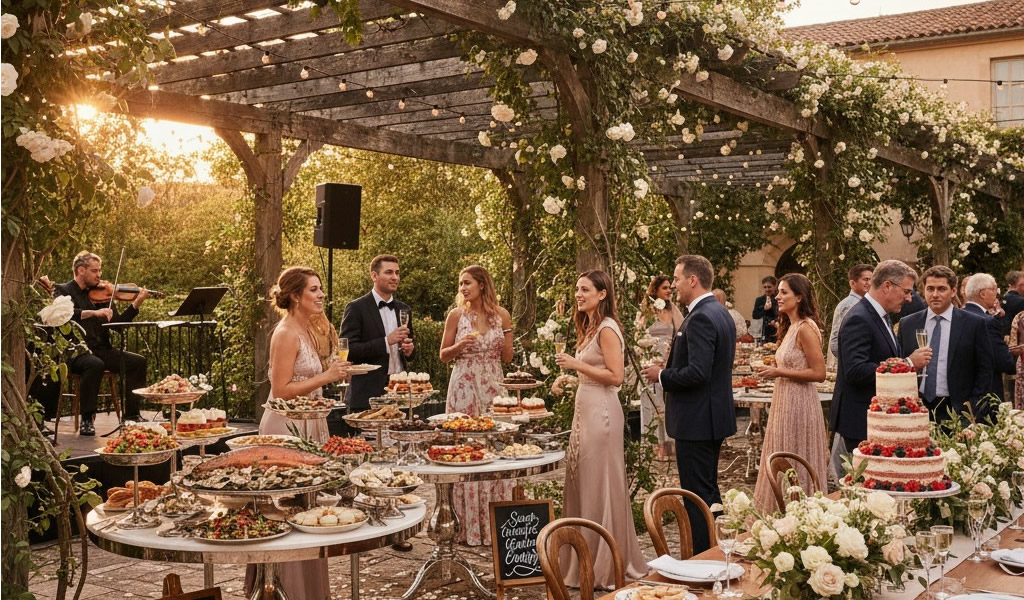
Outdoor weddings provide excellent opportunities for food stations because guests can move freely between different areas.
A garden, ranch, hacienda, vineyard or mountain venue can accommodate several culinary stations that encourage exploration.
However, outdoor catering requires careful logistical planning.
Temperature control, food protection, refrigeration, power, service timing and weather conditions all need to be considered.
The visual appeal of an outdoor food station is important, but the operational side is even more important.
Guests should be able to enjoy the food safely and comfortably regardless of the environment.
Mexican Food Stations for Destination Weddings
Destination weddings offer an especially interesting opportunity to introduce guests to Mexican cuisine.
Many guests may be traveling specifically to experience a location and its culture, so food becomes part of the destination experience.
Instead of serving dishes that guests could easily find at home, the menu can highlight ingredients, recipes and traditions associated with the region where the wedding is taking place.
This can transform dinner into an introduction to the destination.
For international guests, it can also become one of the most memorable parts of the trip.
Mexican Weddings in Colorado
Mexican cuisine can also work beautifully for weddings outside Mexico.
Denver and other Colorado destinations are good examples because the state’s wedding scene includes everything from sophisticated city celebrations to mountain weddings and destination events.
A Mexican food station at a Colorado wedding does not need to imitate a Mexican wedding literally. It can simply introduce the flavors the couple loves into a different environment.
Imagine a mountain wedding with a sophisticated taco station, grilled meats, roasted vegetables, fresh salsas and Mexican-inspired desserts. The combination of Colorado’s landscape and Mexican culinary traditions can create an experience that feels personal rather than themed.
Catering and Guest Count
One of the most important decisions when planning food stations is understanding how many guests will actually use each station.
A taco station for 150 guests requires a very different amount of preparation and service than one for 50.
The caterer should consider not only the total number of guests but also how the stations will be distributed.
If every guest is expected to visit the same station at the same time, a long line can develop quickly.
The objective is to create movement rather than congestion.
This is one reason experienced wedding caterers think about food service as logistics as much as cuisine.
How Many Food Stations Do You Need?
There is no universal number.
A smaller wedding may only need two or three carefully selected stations, while a large reception may benefit from several culinary areas distributed throughout the venue.
The important thing is variety without unnecessary duplication.
Three excellent stations can create a much better experience than seven stations offering similar foods.
Think about the progression of the meal.
Guests might begin with appetizers, move toward a main station, and eventually discover desserts or late-night food.
The stations should create a culinary journey rather than simply a collection of dishes.
Dietary Restrictions and Food Stations
One of the advantages of food stations is that they can make dietary accommodations easier to manage.
Vegetarian, vegan or gluten-conscious options can be incorporated into the overall experience rather than being treated as an afterthought.
Clear labeling can help guests understand what each dish contains.
Professional catering staff should also be able to answer questions about ingredients and preparation.
The goal is to make every guest feel included without drawing unnecessary attention to dietary restrictions.
How Much Food Should You Serve?
Food stations require careful portion planning because guests may visit multiple stations.
This is different from a plated dinner, where the caterer knows approximately how much food each person will receive.
With stations, guests have more freedom.
Some will eat considerably more than others.
An experienced caterer can help calculate appropriate quantities based on the number of guests, the number of stations, the time of service and whether additional dinner or late-night food will be offered.
It is better to plan strategically than simply order enormous quantities of every dish.
Food Stations as Part of the Entertainment
One of the most interesting things about food stations is that they can become part of the entertainment.
A chef preparing tacos in front of guests, grilling meat to order or assembling fresh tostadas creates a sense of activity.
People are not simply waiting for food.
They are watching it being prepared.
This is especially effective when the preparation itself is visually interesting.
The kitchen becomes part of the wedding experience rather than something hidden behind the scenes.
The Importance of Professional Service
Even the best food station can fail if the service is poorly organized.
Food needs to be replenished continuously. Serving areas need to remain clean. Lines need to move efficiently. Hot food needs to remain hot and cold food needs to remain properly chilled.
This is why choosing a wedding caterer should involve more than tasting the food.
Ask how the caterer manages stations during a busy reception.
Ask how many staff members will be present.
Ask how they handle replenishment, dietary restrictions and unexpected changes.
The culinary experience depends as much on execution as it does on the menu.
Creating a Menu With Meaning
Perhaps the best way to approach a Mexican wedding menu is to begin with the couple.
What foods remind you of home?
What did your family serve at celebrations?
Which dishes represent your region?
Which flavors do you both love?
Which foods do you want your guests to discover?
These questions can produce a much more personal menu than simply searching for the most popular Mexican dishes.
A wedding is ultimately a story about two people.
The food should be part of that story.
Final Thoughts on Mexican Wedding Food Stations
Mexican food stations offer couples an opportunity to turn the reception meal into something more interactive, personal and memorable. The format works because Mexican cuisine naturally lends itself to customization, sharing and variety, while the diversity of regional traditions provides almost unlimited possibilities for creating a menu with personality.The most successful wedding food stations are not necessarily the largest or most elaborate.
They are the ones that make sense for the couple, the venue, the guest list and the overall atmosphere of the celebration.
A sophisticated taco station can work beautifully at a modern city wedding. A grilled meat station can become the centerpiece of a large outdoor celebration. Fresh seafood can bring energy to a destination wedding. Churros and Mexican chocolate can provide a memorable late-night experience. And traditional dishes with a family connection can transform the meal from simply good food into something genuinely meaningful.
Whether the wedding takes place in Mexico, Denver, another destination in the United States or somewhere else entirely, Mexican cuisine can adapt beautifully to the environment without losing its identity.
The secret is not trying to make the wedding look more Mexican.
It is allowing the food to tell its own story.
When the ingredients are carefully chosen, the dishes are prepared with respect for their traditions and the presentation is thoughtfully integrated into the wedding design, food stations become more than a convenient way to feed guests.
They become part of the celebration itself.
And years later, when guests remember the wedding, they may not remember every flower or table arrangement.
But they are very likely to remember standing together with friends, choosing a taco, tasting a new salsa, sharing a churro and discovering something delicious in the middle of a celebration they never wanted to end.