
Wedding Florists in Denver, Colorado: How to Create an Unforgettable Floral Setting
Flowers have the ability to transform an ordinary wedding space into an environment that feels completely personal. They can soften a modern ballroom, add color to an industrial venue, bring warmth to a historic building or create a romantic connection between a bride and the natural beauty of Colorado. For couples planning a wedding in Denver, choosing the right wedding florist is therefore about much more than ordering bouquets. It is about creating a visual language that connects the ceremony, reception, wedding dress, photographs and overall atmosphere of the celebration.
Denver is particularly interesting for floral design because weddings here can take place in a remarkable variety of settings. Couples may choose an elegant downtown hotel, a historic landmark, an industrial venue in RiNo, a garden setting, a private estate or a location closer to the foothills. Each environment creates different opportunities for floral design.
A professional Denver wedding florist can help translate an initial idea—romantic, modern, editorial, classic, colorful, minimalist or inspired by Colorado’s natural landscape—into a cohesive floral concept that works with the venue and the wedding itself.
Why Wedding Flowers Matter So Much
Flowers are among the first details guests notice when they enter a wedding ceremony or reception. They establish color, texture, scale and atmosphere, often before guests have had a chance to notice the smaller decorative details.A bridal bouquet frames the wedding dress. Ceremony arrangements create the visual backdrop for the vows. Centerpieces establish the mood of the reception tables, while larger installations can transform an otherwise simple architectural space.
This is why floral design should be considered part of the overall wedding design rather than an isolated decoration.
The most successful weddings usually have a visual relationship between the flowers, stationery, linens, lighting, venue, bridal gown and other details. Nothing has to match perfectly, but the elements should feel as though they belong to the same story.
Choosing a Wedding Florist in Denver
Finding a florist is relatively easy. Finding the right florist for your wedding is a different matter.
Denver has a broad selection of floral professionals, including traditional flower shops, luxury event designers and smaller boutique studios. Some specialize in large-scale weddings, while others focus on intimate celebrations and highly personalized floral concepts.Ed Moore Weddings, for example, describes its Denver studio as specializing in bespoke wedding bouquets, centerpieces and décor, while its team says it has created more than 1,500 weddings.
Newberry Brothers is another established Denver floral business, describing itself as a family-owned florist with special-event floral design experience dating back to 1950.
Boutique studios can offer a different experience. Fleur Decor describes floral design as an art based on the relationship between texture, color and shape, with an emphasis on creating designs that reflect the personality of the client.
The important question is not simply which florist is closest to you. It is which florist understands the aesthetic and scale of your wedding.
Start With the Style of Your Wedding
Before meeting with a florist, it helps to identify the overall visual direction of the wedding.
Do you imagine an elegant and timeless celebration with white flowers and greenery? Perhaps you prefer a colorful garden-inspired wedding with flowers that appear loose and organic. Maybe you want a modern editorial design with sculptural arrangements and unexpected textures.Denver also provides opportunities for couples who want to incorporate the Colorado landscape into their wedding design. Native-inspired textures, seasonal greenery and natural forms can create a connection to the region without turning the wedding into a rustic theme.
Your florist should be able to take these ideas and translate them into flowers and arrangements that work within the actual venue.
Wedding Bouquets in Denver
The bridal bouquet is one of the most personal floral elements of a wedding.
It appears in portraits, during the ceremony, in photographs with family and throughout many of the most important moments of the day. More importantly, it is carried directly against the wedding dress, which means the bouquet should complement the gown rather than compete with it.A minimalist bouquet may work beautifully with a highly detailed wedding dress. A more abundant arrangement can complement a simple gown. Loose, organic flowers can create a romantic aesthetic, while structured arrangements can feel more contemporary and editorial.
The shape of the bouquet matters as well.
Round bouquets, cascading arrangements, asymmetrical bouquets and loose garden-style designs create completely different visual effects. The right choice depends on the bride’s proportions, the silhouette of the gown and the overall wedding aesthetic.
Your Wedding Dress and Your Flowers Should Work Together
The relationship between the wedding dress and bouquet is often underestimated.
The gown provides the foundation for the bridal look, while the flowers add color, texture and movement. A bouquet should complement the fabric, silhouette and details of the dress without overwhelming them.This is particularly important when the gown includes lace, embroidery, beading or other intricate details.
For example, a highly embellished gown may benefit from a bouquet with a simpler shape, allowing the dress to remain the focal point. A clean, minimalist gown may provide the perfect canvas for a more expressive floral arrangement.
This is one reason professional wedding dress alterations and floral design should be considered as parts of the same overall bridal aesthetic. The dress needs to fit the bride perfectly, while the flowers need to frame the finished look.
Ceremony Flowers Can Transform a Venue
The ceremony is where flowers often have the greatest visual impact.
A floral arch can create a dramatic focal point behind the couple. Arrangements along the aisle can guide the eye toward the ceremony space, while smaller floral details can soften chairs, pillars or architectural features.
However, more flowers do not automatically mean a better design.
A thoughtful florist considers the scale of the room and the position of the guests. An arrangement that looks spectacular in a photograph may not work well if it blocks the couple or interferes with the ceremony.
The goal should be to create a setting that enhances the moment without competing with it.
Wedding Flower Arches and Installations
Large floral installations have become increasingly popular because they create an immediate visual statement.
A floral arch can frame the couple during the ceremony and later become a backdrop for photographs. Hanging installations can draw attention upward in venues with high ceilings, while floral walls can create dramatic reception or photo areas.These installations require considerably more planning than a standard bouquet.
The florist needs to consider structure, weight, transportation, installation time, venue restrictions and how the arrangement will look from different angles.
For a Denver wedding, this can become particularly important when a celebration takes place in a venue with unusual architecture or when flowers need to be transported to locations outside the city.
Reception Centerpieces
Centerpieces are one of the most repeated floral elements at a wedding, which makes proportion especially important.
A centerpiece that is too large can interfere with conversation. One that is too small may disappear visually in a large ballroom.
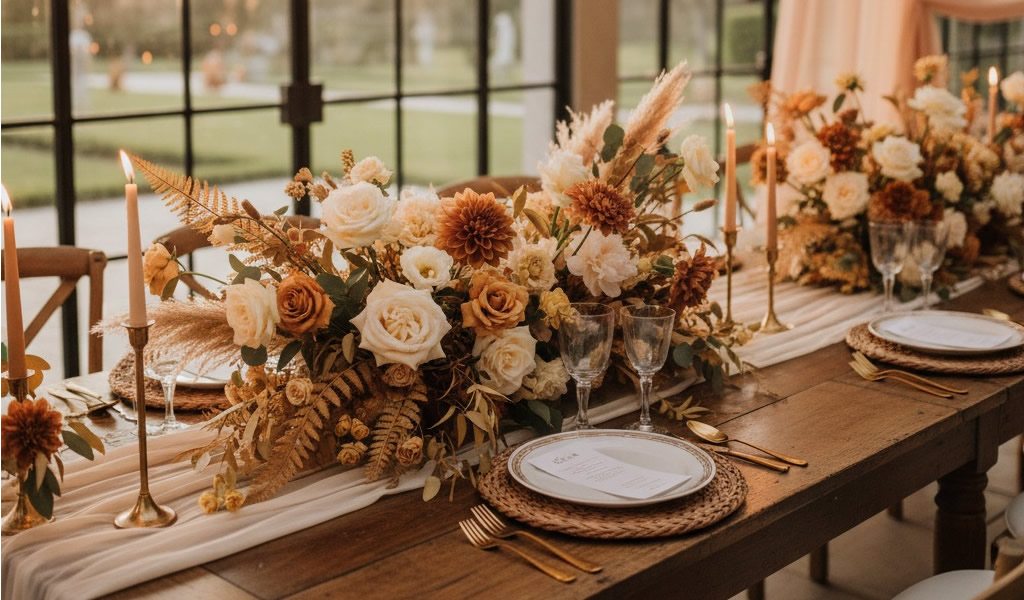
The table itself also matters. Long banquet tables require a different floral strategy from round tables, while a modern reception may benefit from a combination of candles, flowers and sculptural elements.
Some couples prefer lush arrangements, while others want a minimalist composition with a few carefully selected flowers.
The best centerpiece is not necessarily the largest one. It is the one that fits the table, the room and the overall design.
How to Choose Wedding Flowers by Season
Seasonality is an important consideration when planning wedding flowers.
Some flowers are naturally more abundant during certain times of the year, which can influence availability, appearance and cost. A florist can help couples identify alternatives when a particular flower is unavailable or prohibitively expensive.
For a Denver wedding, seasonality can also become part of the aesthetic.
Spring celebrations may emphasize fresh, delicate colors. Summer weddings can incorporate abundant garden-inspired flowers, while autumn allows for richer tones and deeper textures. Winter weddings can use branches, greenery, berries and other seasonal elements to create a sophisticated atmosphere.
Instead of trying to force a particular flower into every wedding, couples can often achieve a more natural and distinctive result by allowing the season to influence the floral design.
Colorado-Inspired Wedding Flowers
A Colorado wedding does not have to look rustic to incorporate elements inspired by the region.
The state’s natural landscape can influence the palette, textures and overall feeling of the floral arrangements without becoming a literal theme.
Muted greens, soft neutrals, earthy tones and organic textures can create an elegant connection to the landscape. Seasonal branches, grasses and natural foliage can add movement and depth.
For couples marrying in Denver and taking portraits in the surrounding areas, this approach can also create visual continuity between the indoor reception and outdoor photographs.
How Much Should You Budget for Wedding Flowers?
The cost of wedding flowers depends on the number of arrangements, the types of flowers selected, the size of the installations and the amount of labor required.
A bridal bouquet is only one component of the overall floral budget. Couples may also need flowers for bridesmaids, boutonnieres, ceremony arrangements, aisle décor, reception centerpieces, sweetheart tables, cocktail tables, installations and other areas of the venue.
Large installations can significantly increase the amount of labor and structural support required.
Instead of approaching a florist with a fixed list of individual flowers, it can be more productive to discuss the overall budget and priorities. A professional floral designer can then determine where the budget will have the greatest visual impact.
For example, some couples may prioritize the ceremony backdrop and bridal bouquet while keeping the reception centerpieces more restrained.
How to Save Money Without Making the Wedding Look Cheap
A smaller floral budget does not necessarily mean an unattractive wedding.
One of the most effective strategies is to concentrate flowers where they will be noticed most.
A spectacular ceremony installation can later be moved to the reception. Bridesmaids’ bouquets can sometimes become part of the reception décor. Candles, greenery and architectural elements can also contribute to the overall visual impact without requiring flowers everywhere.
Seasonal flowers can provide another opportunity to control costs.
Most importantly, communicate your budget honestly with the florist. A good designer should be able to explain what is realistic and where adjustments can be made.
Denver wedding florists work with a wide range of wedding styles and budgets, and some specifically emphasize helping couples maximize their floral investment. Ed Moore Weddings, for example, describes its process as including a personalized design plan and budget-conscious floral planning.
Sustainable Wedding Flowers in Denver
Sustainability has also become part of the conversation around wedding flowers.
Fresh flowers can involve significant transportation, refrigeration, floral foam and other materials. Couples interested in a more environmentally conscious celebration can ask their florist about seasonal and locally sourced flowers, reusable vessels, composting and alternatives to single-use floral materials.
Some sustainability decisions are relatively simple.
Using seasonal flowers can reduce dependence on flowers that must travel long distances. Choosing reusable containers can reduce waste, while avoiding floral foam can eliminate a material that is difficult to dispose of responsibly.
Sustainable floral design does not have to look rustic or minimal. It can be elegant, luxurious and highly sophisticated.
Dried Flowers and Alternative Floral Designs
Fresh flowers are not the only option for wedding décor.
Dried flowers, preserved botanicals and other long-lasting materials can create a completely different aesthetic. They can also be incorporated alongside fresh flowers to add texture and extend the life of certain arrangements.
For some couples, alternative flowers may be particularly appropriate for reception décor, installations or details that need to remain in place for longer periods.
The important thing is to select materials that fit the visual concept of the wedding rather than choosing an alternative simply because it is different.
What Should You Ask a Denver Wedding Florist?
Before signing a contract, couples should understand exactly what the florist will provide.
Ask about:
- The floral design concept
- Bouquets and boutonnieres
- Ceremony flowers
- Reception centerpieces
- Floral installations
- Delivery
- Setup and breakdown
- Rental containers
- Candles or additional décor
- Seasonal flower substitutions
- Minimum order requirements
- Additional labor or installation fees
It is also useful to ask whether the florist provides a design proposal or visual plan before the wedding.
A detailed plan can help ensure that everyone has the same understanding of the final design.
Why a Floral Design Consultation Matters
A consultation is more than simply choosing flowers from a catalog.
It is an opportunity to explain the atmosphere you want to create and show the florist photographs, colors, fabrics and other visual references that represent your taste.
Some Denver florists specifically emphasize personal consultations as part of their design process. Fleur Decor, for example, describes face-to-face consultation as an important part of understanding the client’s personality and creating floral designs around that vision.
Bring photographs of your wedding dress, venue and inspiration images to the consultation. Your florist can then begin thinking about the wedding as a complete visual environment rather than designing the flowers in isolation.
How Flowers Appear in Wedding Photography
Flowers are also an important consideration from a photography perspective.
The bridal bouquet appears in portraits, detail photographs and family images. Ceremony arrangements become part of the background, while centerpieces and installations help establish the visual identity of the reception.
Color and texture can become especially important in photographs.
A bouquet with varied textures may create more visual depth than one composed entirely of identical flowers. Similarly, a ceremony installation can provide a strong background that gives portraits a distinctive sense of place.
This is another reason to think about floral design as part of the entire wedding experience.
Denver Wedding Florists for Different Styles
There is no single “best” type of wedding florist because different designers specialize in different aesthetics.
A large established florist may be appropriate for a wedding requiring extensive delivery, installation and production. Newberry Brothers, for example, combines traditional florist services with wedding and event floral design and has been operating in Denver for decades.
A boutique floral studio may be better suited to couples looking for a highly customized, artistic design. Fleur Decor describes itself as a Colorado wedding and special-events floral boutique focused on the relationship between color, texture and shape.
Other studios focus specifically on luxury and creative wedding floristry throughout Denver and Colorado’s Front Range. Flower Habit Design Co., for example, describes its work as luxury and creative wedding and event floristry and also offers candle and glassware rentals for tablescapes.
The right choice depends on the size, style and logistical requirements of your wedding.
Finding the Right Wedding Florist in Denver, Colorado
Choosing flowers for your wedding is ultimately an exercise in storytelling.
The bouquet should feel connected to the bride. The ceremony flowers should complement the venue. The centerpieces should work with the tablescape. Large installations should enhance the architecture rather than hide it. And everything should feel connected to the overall aesthetic of the celebration.
Denver offers an unusually broad range of possibilities, from sophisticated downtown weddings to celebrations inspired by Colorado’s natural landscape.
Instead of asking only, “Which flowers do I like?” ask a larger question:
How do I want my wedding to feel?
Once that question has been answered, the flowers become a way of expressing that feeling.
Final Thoughts
The best wedding flowers are not necessarily the most expensive, the largest or the most exotic. They are the flowers that make sense for the couple, the venue, the season and the story they want to tell.
A carefully designed bouquet can complement the wedding dress. A floral arch can transform a ceremony. A thoughtfully planned centerpiece can make a reception table feel intimate and elegant. And a large installation can turn an ordinary room into a memorable setting.
For couples planning a wedding in Denver, working with an experienced wedding florist in Denver, Colorado can make the difference between simply having flowers at the wedding and creating a complete floral environment.
From downtown Denver to the surrounding Front Range, the possibilities are extensive. The key is to begin with your vision, understand your venue, establish your priorities and find a floral designer who can translate those ideas into flowers, texture, color and form.
Your wedding flowers should not simply decorate the day.
They should become part of the memory.
Flowers have the ability to transform an ordinary wedding space into an environment that feels completely personal. They can soften a modern ballroom, add color to an industrial venue, bring warmth to a historic building or create a romantic connection between a bride and the natural beauty of Colorado. For couples planning a wedding in Denver, choosing the right wedding florist is therefore about much more than ordering bouquets. It is about creating a visual language that connects the ceremony, reception, wedding dress, photographs and overall atmosphere of the celebration.
Denver is particularly interesting for floral design because weddings here can take place in a remarkable variety of settings. Couples may choose an elegant downtown hotel, a historic landmark, an industrial venue in RiNo, a garden setting, a private estate or a location closer to the foothills. Each environment creates different opportunities for floral design.
A professional Denver wedding florist can help translate an initial idea—romantic, modern, editorial, classic, colorful, minimalist or inspired by Colorado’s natural landscape—into a cohesive floral concept that works with the venue and the wedding itself.
Why Wedding Flowers Matter So Much
Flowers are among the first details guests notice when they enter a wedding ceremony or reception. They establish color, texture, scale and atmosphere, often before guests have had a chance to notice the smaller decorative details.
A bridal bouquet frames the wedding dress. Ceremony arrangements create the visual backdrop for the vows. Centerpieces establish the mood of the reception tables, while larger installations can transform an otherwise simple architectural space.
This is why floral design should be considered part of the overall wedding design rather than an isolated decoration.
The most successful weddings usually have a visual relationship between the flowers, stationery, linens, lighting, venue, bridal gown and other details. Nothing has to match perfectly, but the elements should feel as though they belong to the same story.
Choosing a Wedding Florist in Denver
Finding a florist is relatively easy. Finding the right florist for your wedding is a different matter.
Denver has a broad selection of floral professionals, including traditional flower shops, luxury event designers and smaller boutique studios. Some specialize in large-scale weddings, while others focus on intimate celebrations and highly personalized floral concepts.
Ed Moore Weddings, for example, describes its Denver studio as specializing in bespoke wedding bouquets, centerpieces and décor, while its team says it has created more than 1,500 weddings.
Newberry Brothers is another established Denver floral business, describing itself as a family-owned florist with special-event floral design experience dating back to 1950.
Boutique studios can offer a different experience. Fleur Decor describes floral design as an art based on the relationship between texture, color and shape, with an emphasis on creating designs that reflect the personality of the client.
The important question is not simply which florist is closest to you. It is which florist understands the aesthetic and scale of your wedding.
Start With the Style of Your Wedding
Before meeting with a florist, it helps to identify the overall visual direction of the wedding.
Do you imagine an elegant and timeless celebration with white flowers and greenery? Perhaps you prefer a colorful garden-inspired wedding with flowers that appear loose and organic. Maybe you want a modern editorial design with sculptural arrangements and unexpected textures.
Denver also provides opportunities for couples who want to incorporate the Colorado landscape into their wedding design. Native-inspired textures, seasonal greenery and natural forms can create a connection to the region without turning the wedding into a rustic theme.
Your florist should be able to take these ideas and translate them into flowers and arrangements that work within the actual venue.
Wedding Bouquets in Denver
The bridal bouquet is one of the most personal floral elements of a wedding.
It appears in portraits, during the ceremony, in photographs with family and throughout many of the most important moments of the day. More importantly, it is carried directly against the wedding dress, which means the bouquet should complement the gown rather than compete with it.
A minimalist bouquet may work beautifully with a highly detailed wedding dress. A more abundant arrangement can complement a simple gown. Loose, organic flowers can create a romantic aesthetic, while structured arrangements can feel more contemporary and editorial.
The shape of the bouquet matters as well.
Round bouquets, cascading arrangements, asymmetrical bouquets and loose garden-style designs create completely different visual effects. The right choice depends on the bride’s proportions, the silhouette of the gown and the overall wedding aesthetic.
Your Wedding Dress and Your Flowers Should Work Together
The relationship between the wedding dress and bouquet is often underestimated.
The gown provides the foundation for the bridal look, while the flowers add color, texture and movement. A bouquet should complement the fabric, silhouette and details of the dress without overwhelming them.
This is particularly important when the gown includes lace, embroidery, beading or other intricate details.
For example, a highly embellished gown may benefit from a bouquet with a simpler shape, allowing the dress to remain the focal point. A clean, minimalist gown may provide the perfect canvas for a more expressive floral arrangement.
This is one reason professional wedding dress alterations and floral design should be considered as parts of the same overall bridal aesthetic. The dress needs to fit the bride perfectly, while the flowers need to frame the finished look.
Ceremony Flowers Can Transform a Venue
The ceremony is where flowers often have the greatest visual impact.
A floral arch can create a dramatic focal point behind the couple. Arrangements along the aisle can guide the eye toward the ceremony space, while smaller floral details can soften chairs, pillars or architectural features.
However, more flowers do not automatically mean a better design.
A thoughtful florist considers the scale of the room and the position of the guests. An arrangement that looks spectacular in a photograph may not work well if it blocks the couple or interferes with the ceremony.
The goal should be to create a setting that enhances the moment without competing with it.
Wedding Flower Arches and Installations
Large floral installations have become increasingly popular because they create an immediate visual statement.
A floral arch can frame the couple during the ceremony and later become a backdrop for photographs. Hanging installations can draw attention upward in venues with high ceilings, while floral walls can create dramatic reception or photo areas.
These installations require considerably more planning than a standard bouquet.
The florist needs to consider structure, weight, transportation, installation time, venue restrictions and how the arrangement will look from different angles.
For a Denver wedding, this can become particularly important when a celebration takes place in a venue with unusual architecture or when flowers need to be transported to locations outside the city.
Reception Centerpieces
Centerpieces are one of the most repeated floral elements at a wedding, which makes proportion especially important.
A centerpiece that is too large can interfere with conversation. One that is too small may disappear visually in a large ballroom.
The table itself also matters. Long banquet tables require a different floral strategy from round tables, while a modern reception may benefit from a combination of candles, flowers and sculptural elements.
Some couples prefer lush arrangements, while others want a minimalist composition with a few carefully selected flowers.
The best centerpiece is not necessarily the largest one. It is the one that fits the table, the room and the overall design.
How to Choose Wedding Flowers by Season
Seasonality is an important consideration when planning wedding flowers.
Some flowers are naturally more abundant during certain times of the year, which can influence availability, appearance and cost. A florist can help couples identify alternatives when a particular flower is unavailable or prohibitively expensive.
For a Denver wedding, seasonality can also become part of the aesthetic.
Spring celebrations may emphasize fresh, delicate colors. Summer weddings can incorporate abundant garden-inspired flowers, while autumn allows for richer tones and deeper textures. Winter weddings can use branches, greenery, berries and other seasonal elements to create a sophisticated atmosphere.
Instead of trying to force a particular flower into every wedding, couples can often achieve a more natural and distinctive result by allowing the season to influence the floral design.
Colorado-Inspired Wedding Flowers
A Colorado wedding does not have to look rustic to incorporate elements inspired by the region.
The state’s natural landscape can influence the palette, textures and overall feeling of the floral arrangements without becoming a literal theme.
Muted greens, soft neutrals, earthy tones and organic textures can create an elegant connection to the landscape. Seasonal branches, grasses and natural foliage can add movement and depth.
For couples marrying in Denver and taking portraits in the surrounding areas, this approach can also create visual continuity between the indoor reception and outdoor photographs.
How Much Should You Budget for Wedding Flowers?
The cost of wedding flowers depends on the number of arrangements, the types of flowers selected, the size of the installations and the amount of labor required.
A bridal bouquet is only one component of the overall floral budget. Couples may also need flowers for bridesmaids, boutonnieres, ceremony arrangements, aisle décor, reception centerpieces, sweetheart tables, cocktail tables, installations and other areas of the venue.
Large installations can significantly increase the amount of labor and structural support required.
Instead of approaching a florist with a fixed list of individual flowers, it can be more productive to discuss the overall budget and priorities. A professional floral designer can then determine where the budget will have the greatest visual impact.
For example, some couples may prioritize the ceremony backdrop and bridal bouquet while keeping the reception centerpieces more restrained.
How to Save Money Without Making the Wedding Look Cheap
A smaller floral budget does not necessarily mean an unattractive wedding.
One of the most effective strategies is to concentrate flowers where they will be noticed most.
A spectacular ceremony installation can later be moved to the reception. Bridesmaids’ bouquets can sometimes become part of the reception décor. Candles, greenery and architectural elements can also contribute to the overall visual impact without requiring flowers everywhere.
Seasonal flowers can provide another opportunity to control costs.
Most importantly, communicate your budget honestly with the florist. A good designer should be able to explain what is realistic and where adjustments can be made.
Denver wedding florists work with a wide range of wedding styles and budgets, and some specifically emphasize helping couples maximize their floral investment. Ed Moore Weddings, for example, describes its process as including a personalized design plan and budget-conscious floral planning.
Sustainable Wedding Flowers in Denver
Sustainability has also become part of the conversation around wedding flowers.
Fresh flowers can involve significant transportation, refrigeration, floral foam and other materials. Couples interested in a more environmentally conscious celebration can ask their florist about seasonal and locally sourced flowers, reusable vessels, composting and alternatives to single-use floral materials.
Some sustainability decisions are relatively simple.
Using seasonal flowers can reduce dependence on flowers that must travel long distances. Choosing reusable containers can reduce waste, while avoiding floral foam can eliminate a material that is difficult to dispose of responsibly.
Sustainable floral design does not have to look rustic or minimal. It can be elegant, luxurious and highly sophisticated.
Dried Flowers and Alternative Floral Designs
Fresh flowers are not the only option for wedding décor.
Dried flowers, preserved botanicals and other long-lasting materials can create a completely different aesthetic. They can also be incorporated alongside fresh flowers to add texture and extend the life of certain arrangements.
For some couples, alternative flowers may be particularly appropriate for reception décor, installations or details that need to remain in place for longer periods.
The important thing is to select materials that fit the visual concept of the wedding rather than choosing an alternative simply because it is different.
What Should You Ask a Denver Wedding Florist?
Before signing a contract, couples should understand exactly what the florist will provide.
Ask about:
- The floral design concept
- Bouquets and boutonnieres
- Ceremony flowers
- Reception centerpieces
- Floral installations
- Delivery
- Setup and breakdown
- Rental containers
- Candles or additional décor
- Seasonal flower substitutions
- Minimum order requirements
- Additional labor or installation fees
It is also useful to ask whether the florist provides a design proposal or visual plan before the wedding.
A detailed plan can help ensure that everyone has the same understanding of the final design.
Why a Floral Design Consultation Matters
A consultation is more than simply choosing flowers from a catalog.
It is an opportunity to explain the atmosphere you want to create and show the florist photographs, colors, fabrics and other visual references that represent your taste.
Some Denver florists specifically emphasize personal consultations as part of their design process. Fleur Decor, for example, describes face-to-face consultation as an important part of understanding the client’s personality and creating floral designs around that vision.
Bring photographs of your wedding dress, venue and inspiration images to the consultation. Your florist can then begin thinking about the wedding as a complete visual environment rather than designing the flowers in isolation.
How Flowers Appear in Wedding Photography
Flowers are also an important consideration from a photography perspective.
The bridal bouquet appears in portraits, detail photographs and family images. Ceremony arrangements become part of the background, while centerpieces and installations help establish the visual identity of the reception.
Color and texture can become especially important in photographs.
A bouquet with varied textures may create more visual depth than one composed entirely of identical flowers. Similarly, a ceremony installation can provide a strong background that gives portraits a distinctive sense of place.
This is another reason to think about floral design as part of the entire wedding experience.
Denver Wedding Florists for Different Styles
There is no single “best” type of wedding florist because different designers specialize in different aesthetics.
A large established florist may be appropriate for a wedding requiring extensive delivery, installation and production. Newberry Brothers, for example, combines traditional florist services with wedding and event floral design and has been operating in Denver for decades.
A boutique floral studio may be better suited to couples looking for a highly customized, artistic design. Fleur Decor describes itself as a Colorado wedding and special-events floral boutique focused on the relationship between color, texture and shape.
Other studios focus specifically on luxury and creative wedding floristry throughout Denver and Colorado’s Front Range. Flower Habit Design Co., for example, describes its work as luxury and creative wedding and event floristry and also offers candle and glassware rentals for tablescapes.
The right choice depends on the size, style and logistical requirements of your wedding.
Finding the Right Wedding Florist in Denver, Colorado
Choosing flowers for your wedding is ultimately an exercise in storytelling.
The bouquet should feel connected to the bride. The ceremony flowers should complement the venue. The centerpieces should work with the tablescape. Large installations should enhance the architecture rather than hide it. And everything should feel connected to the overall aesthetic of the celebration.
Denver offers an unusually broad range of possibilities, from sophisticated downtown weddings to celebrations inspired by Colorado’s natural landscape.
Instead of asking only, “Which flowers do I like?” ask a larger question:
How do I want my wedding to feel?
Once that question has been answered, the flowers become a way of expressing that feeling.
Final Thoughts
The best wedding flowers are not necessarily the most expensive, the largest or the most exotic. They are the flowers that make sense for the couple, the venue, the season and the story they want to tell.
A carefully designed bouquet can complement the wedding dress. A floral arch can transform a ceremony. A thoughtfully planned centerpiece can make a reception table feel intimate and elegant. And a large installation can turn an ordinary room into a memorable setting.
For couples planning a wedding in Denver, working with an experienced wedding florist in Denver, Colorado can make the difference between simply having flowers at the wedding and creating a complete floral environment.
From downtown Denver to the surrounding Front Range, the possibilities are extensive. The key is to begin with your vision, understand your venue, establish your priorities and find a floral designer who can translate those ideas into flowers, texture, color and form.
Your wedding flowers should not simply decorate the day.
They should become part of the memory.